Home siding is not just about design and weather protection. Quality siding boosts your home’s durability and keeps you comfortable year-round, thanks to effective insulation. Well-designed insulation is key to a cozy, energy-efficient, and long-lasting home.
A large amount of heat escapes through uninsulated walls. Even with quality interior insulation, gaps, thermal bridges, and moisture issues can reduce a home’s effectiveness. Instead, siding insulation helps create a continuous thermal barrier that works with your siding.
In this article, we will discuss what siding insulation is, how it works, its key benefits, and the best options for different homes and conditions.
Let’s begin by answering a fundamental question: What is siding insulation?
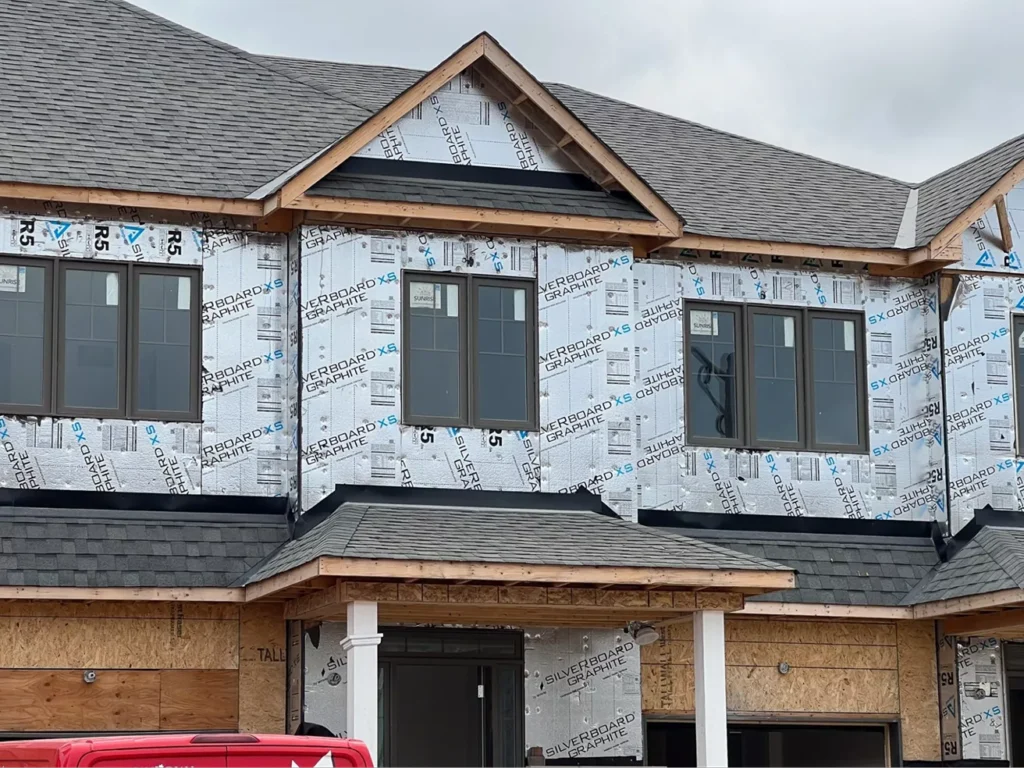
Siding insulation is the process of installing an additional layer of thermal insulation, a material that limits heat transfer on the exterior walls of a building during siding installation. This technology involves placing the insulation between the load-bearing wall (the main structural wall of your house) and the cladding (the outer protective layer).
How siding and insulation work together
Insulation and siding work as one system. Siding serves as an exterior shield that protects the home from precipitation, wind, sun, and other forms of damage. Insulation, on the other hand, is an internal barrier that keeps heat inside the house in winter and keeps it out in summer.
Difference between insulation siding and traditional siding
Unlike insulated siding, its traditional version serves only as a design element, providing minimal protection against precipitation and external damage. And this is installed separately during installation. In addition, installing conventional siding is more complicated and takes longer.
Thermal insulation properties also differ: insulated siding retains heat in winter and keeps cool in summer by reducing heat transfer, while regular siding without additional insulation acts as a basic house covering without such benefits.
Exterior siding insulation vs interior wall insulation
The next question for a homeowner is whether to install insulation outside or inside the house.
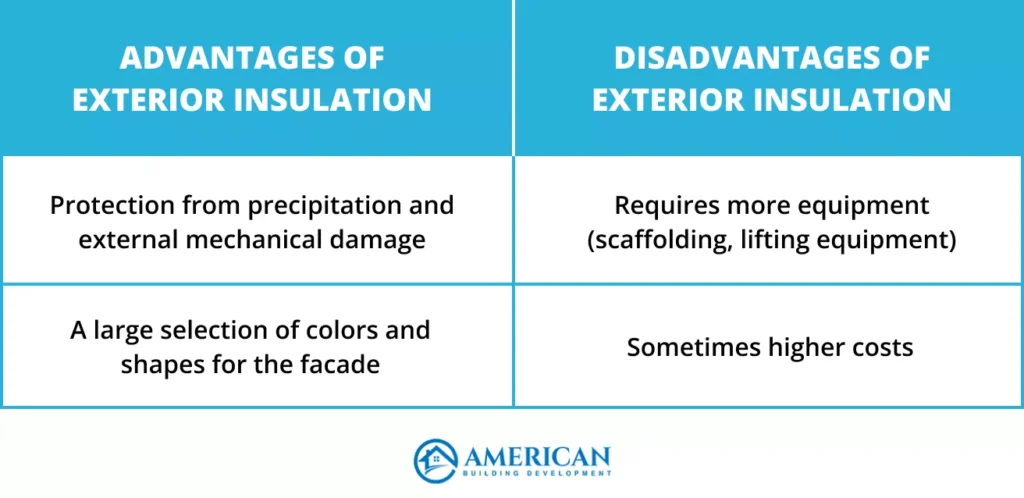
Exterior insulation is ideal for private homes because it protects against the cold and enhances your home’s exterior. It is reliable and long-lasting.
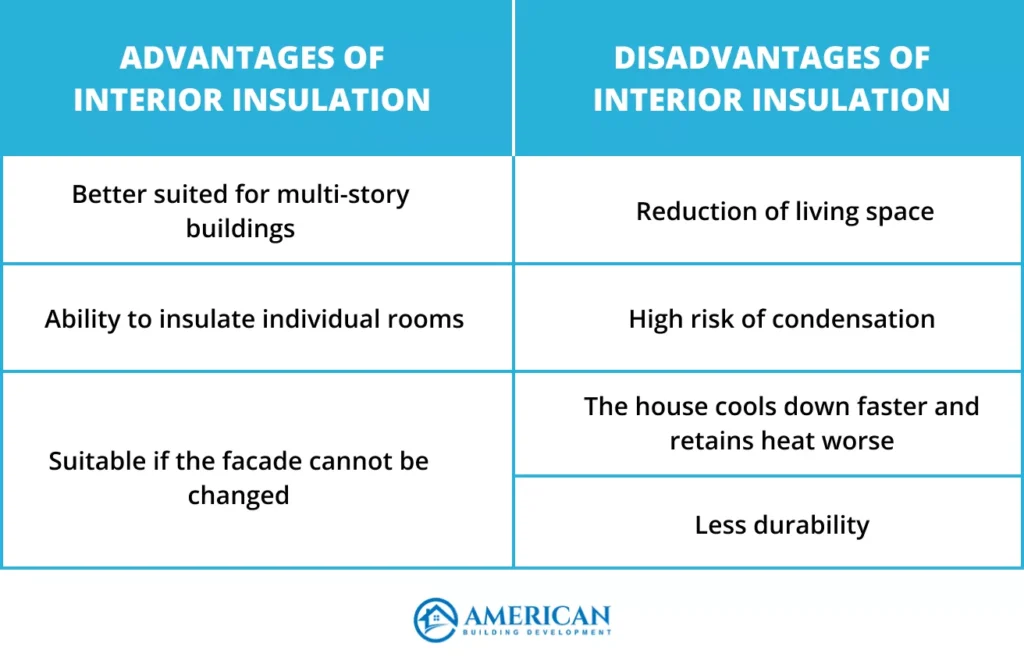
Interior insulation is less effective than exterior insulation, but it can work when exterior installation isn’t feasible.
Benefits of house siding insulation
Properly installed insulation offers years of comfort, warmth, protection, and added curb appeal.
Here are some key advantages of insulation siding:
Energy efficiency and reduced heat loss
Insulation for siding helps you significantly reduce the energy you use to heat your home, thanks to its strong insulation and long-term heat retention.
Improved indoor comfort year-round
Your home will remain comfortable year-round with thermal insulation that blocks summer heat and retains winter warmth.
Moisture control and mold prevention
While interior insulation doesn’t control moisture or prevent mold, siding insulation creates conditions that inhibit moisture buildup in walls.
Noise reduction and soundproofing
Facade insulation enhances noise reduction, helping eliminate outdoor disturbances such as traffic and neighborhood noise.
Increased home value and durability
If you are planning to sell or rent out your home, insulation behind siding will automatically increase the price and demand for your home.
A refreshed design can attract buyers, while the comfort insulation it provides is an extra selling point.
The house will become much more durable after insulation installation, and you can return to it even in the coldest winter and the hottest summer.
Common siding insulation types
After we have familiarized ourselves with the general concepts of siding insulation, let’s move on to a more detailed overview of the different types, analyzing their specifics, advantages, and disadvantages.
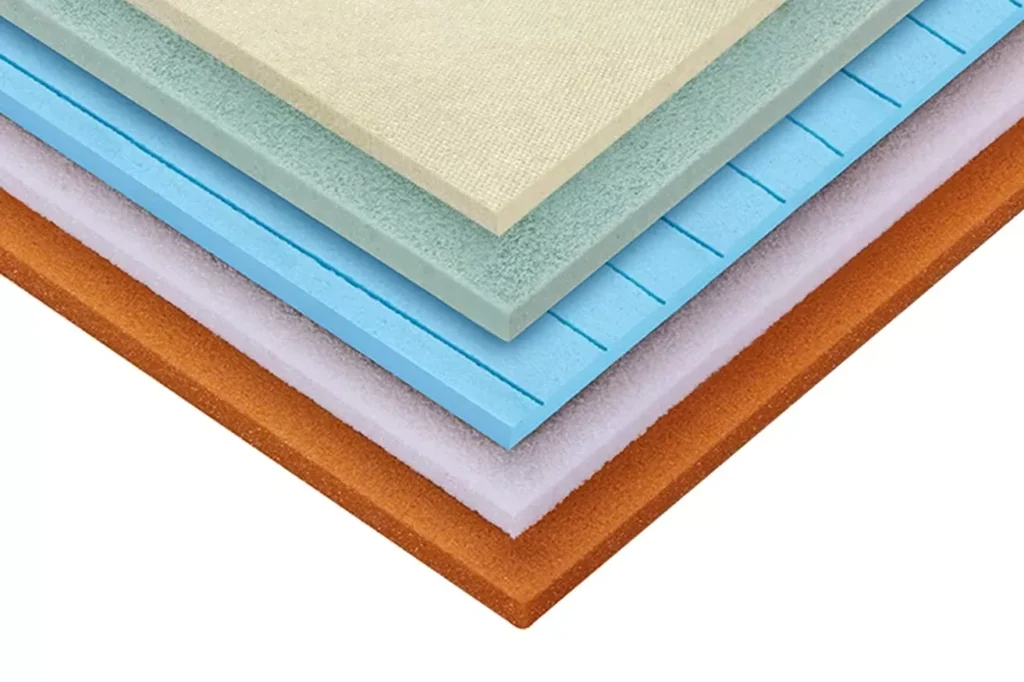
Rigid foam boards for exterior insulation under siding
Rigid foam boards are one of the most popular types of home insulation. They are lightweight panels that are installed under siding.
Their key advantages are their low price, lightness, durability, and moisture resistance. And most importantly, they are easy to install. As for the disadvantages, this material is flammable, easily damaged during operation, and can be eaten by rodents, but this can be fixed with a cement or metal coating.
Rigid foam boards are an ideal solution for homeowners looking for high-quality, fast, and cost-effective insulation. This is a good basic solution for a facade, especially when energy efficiency and durability are important.
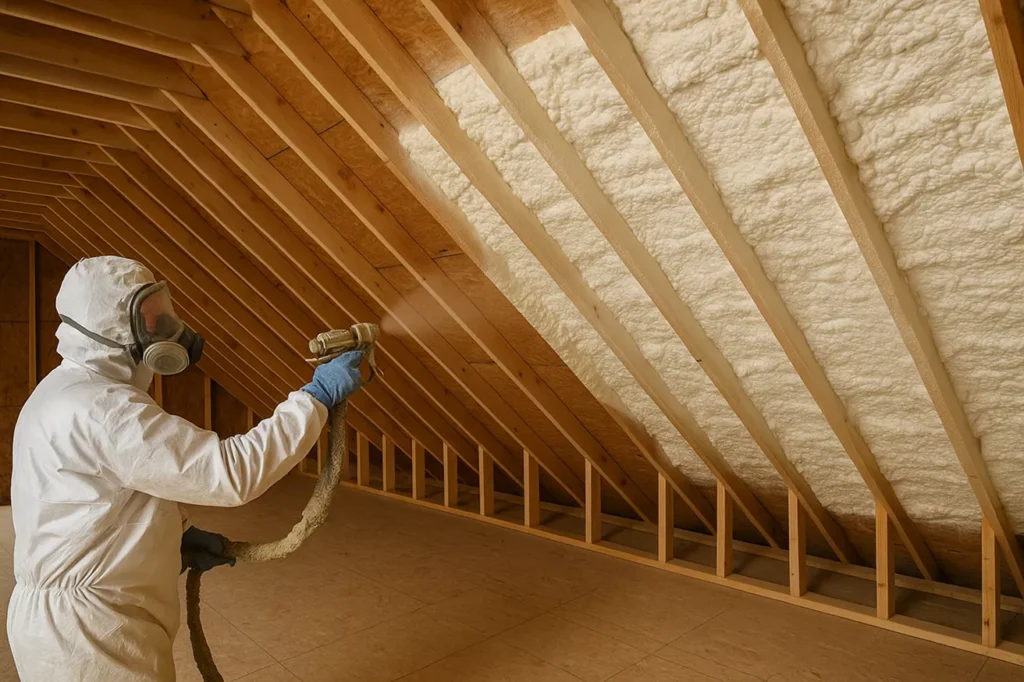
Spray foam insulation behind siding
Spray foam is a liquid polyurethane mixture that expands when applied, filling all gaps that need insulation. Polyurethane is a type of plastic that forms a rigid foam as it solidifies. This option is considered a premium material and requires a skilled craftsman to install correctly.
The advantages of this type of insulation include excellent sealing (airtightness) and insulation, as well as the ability to apply foam in hard-to-reach areas. The disadvantages are high cost, challenging installation, and low vapor resistance (the inability to block moisture movement through walls), and flammability.
Spray foam is an ideal choice for roofs, parapets, and premises where high air tightness is required.
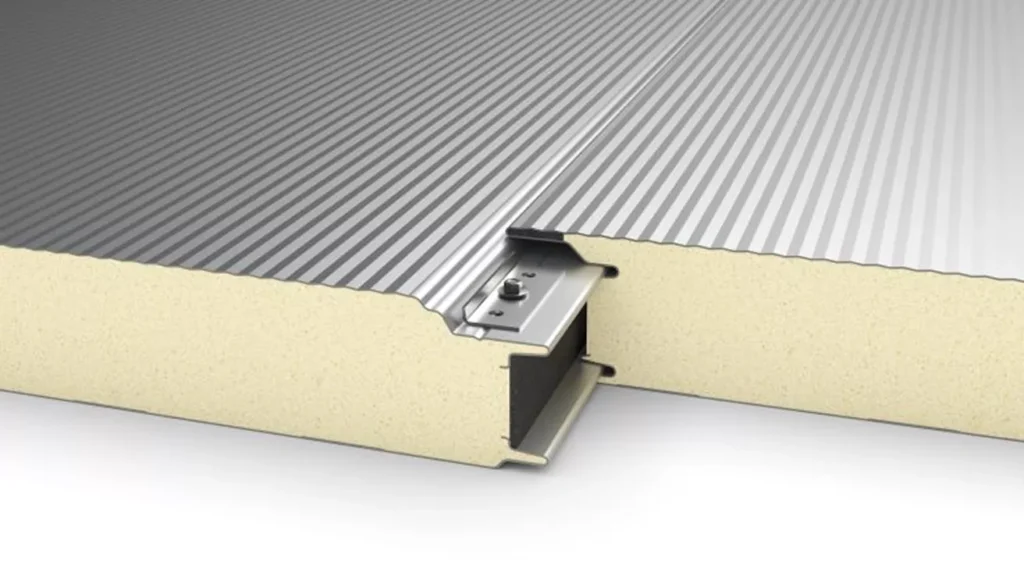
Insulated panels and insulation siding systems
Insulated panels are ready-made panels that include both a decorative part and insulation, which makes them very convenient to install.
The 2-in-1 system, easy installation, a wide choice of designs, and durability are the advantages of this type of insulation. The disadvantages are the higher cost of the material and the need for precise installation.
Insulation boards are an ideal choice for those who want to quickly insulate their home and update their facade.
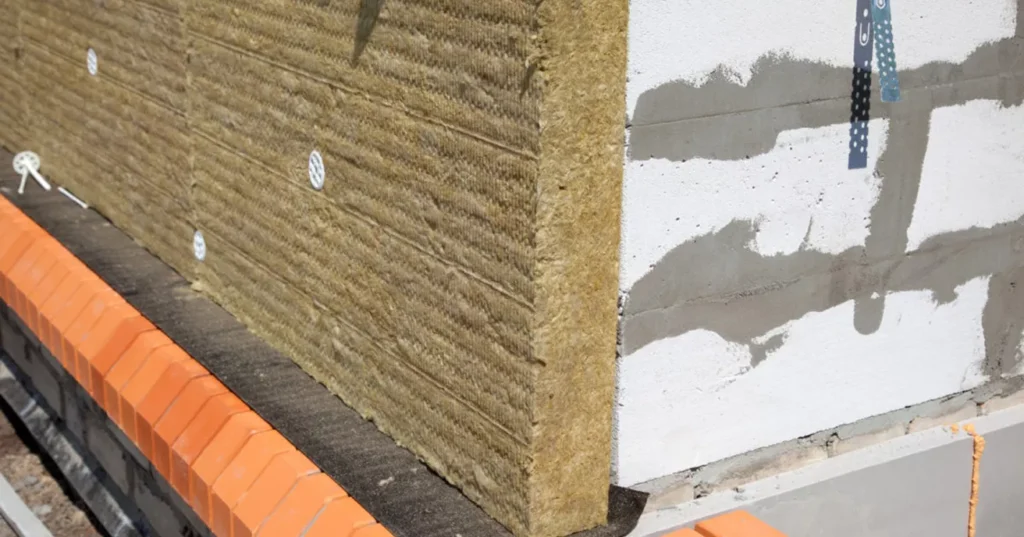
Fiber and mineral-based insulation for siding
Fiber and mineral-based insulation is made from organic materials that form a porous structure.
The main advantages of this type of insulation are environmental friendliness, resistance to high temperatures, and excellent noise insulation. Of the significant disadvantages, one can single out complex installation and poor moisture resistance.
Fiber and mineral-based insulation materials are the best choice for those who value fire safety and high-quality sound insulation.
Insulation under siding: What homeowners should know
We have already discussed what siding insulation is, its main benefits, and its different types.
Now, let’s delve into the topic of what every homeowner should know about siding and insulation.
Under-siding insulation for different climate zones
An important factor in choosing the type of insulation is your region’s climate.
For example, in northern states with cold climates, spray foam is best because it retains heat better. And in southern regions, where temperatures do not drop below zero, the best option is organic insulation, which is more breathable.
Always check local building codes for minimum R-value requirements in your area. The R-value is a measure of how well insulation resists heat flow. It will help you select the right insulation.
Common mistakes when installing insulation behind siding
When working with insulation, you should always be very careful throughout the entire process, from purchasing the material to installation.
Here are some main mistakes:
- Leaving gaps uninsulated: This will lead to heat loss and moisture ingress.
- Choosing poor-quality materials and equipment: In the long run, damage will occur.
- Wrong insulation for the climate: The home will simply become uncomfortable to live in, not to mention damage.
- Failing to install moisture barriers will lead to mold and rotting walls.
- Compressing insulation: Insulation needs air pockets to work properly.
Vinyl siding insulation options
After reviewing the main types of siding insulation and the key considerations homeowners should keep in mind, it’s important to take a closer look at insulation behind vinyl facade options. Vinyl siding is one of the most widely used exterior cladding materials thanks to its affordability, durability, and low maintenance.
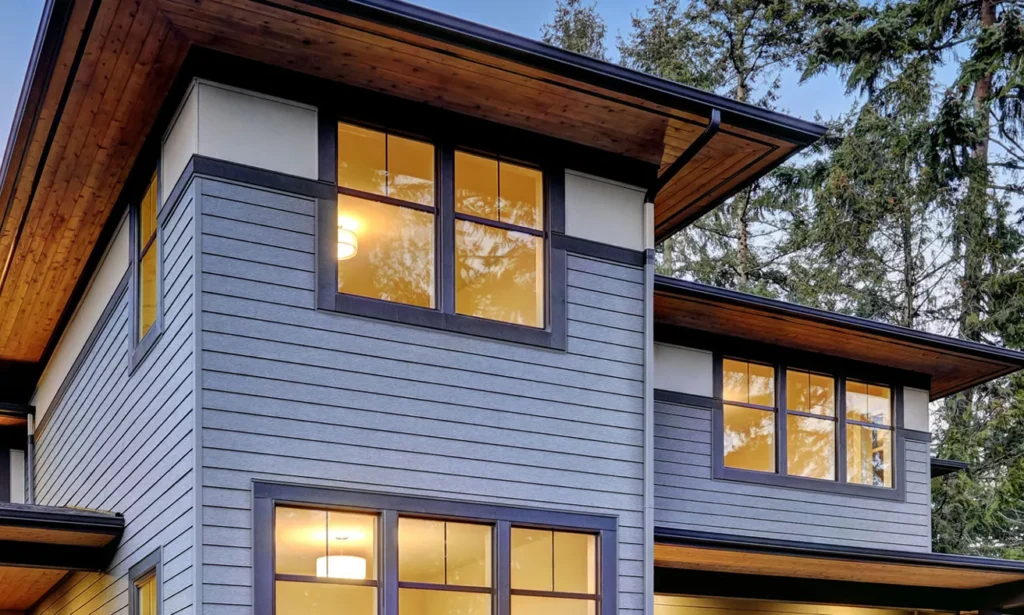
What is vinyl siding insulation?
Insulation under vinyl siding is insulation installed behind or with vinyl siding to keep a home warmer in winter, cooler in summer, and more energy-efficient.
Insulation for vinyl siding vs standard vinyl siding
Insulated vinyl siding already contains insulation, while regular vinyl siding does not. The first option is best for a house that is not yet insulated, while the regular option is used when insulation is already in place.
Insulation under vinyl siding: Pros and cons
Everything has its advantages and disadvantages. Let’s look at vinyl siding looking from this perspective.
Advantageous:
- Reduced heat loss
- Prevents moisture and mold
- Better sound insulation
- Wide choice of materials
- More energy saving
Disadvantageous:
- More difficult installation
- Installation work may cost more
Insulation behind vinyl siding and energy performance
As we mentioned earlier, siding alone does not provide sufficient heat, leading to higher energy consumption and additional costs.
Best insulation under vinyl siding option
Currently, one of the most popular types of siding is vinyl siding, due to its lower price, good looks, and easy installation. So let’s look at the best type of insulation for vinyl siding.
Rigid foam is the best insulation for vinyl siding
This type of insulation does not absorb moisture and works well with ventilated siding systems. As a result, rigid foam improves energy efficiency, protects walls from temperature fluctuations, and supports the long-term durability of vinyl siding.
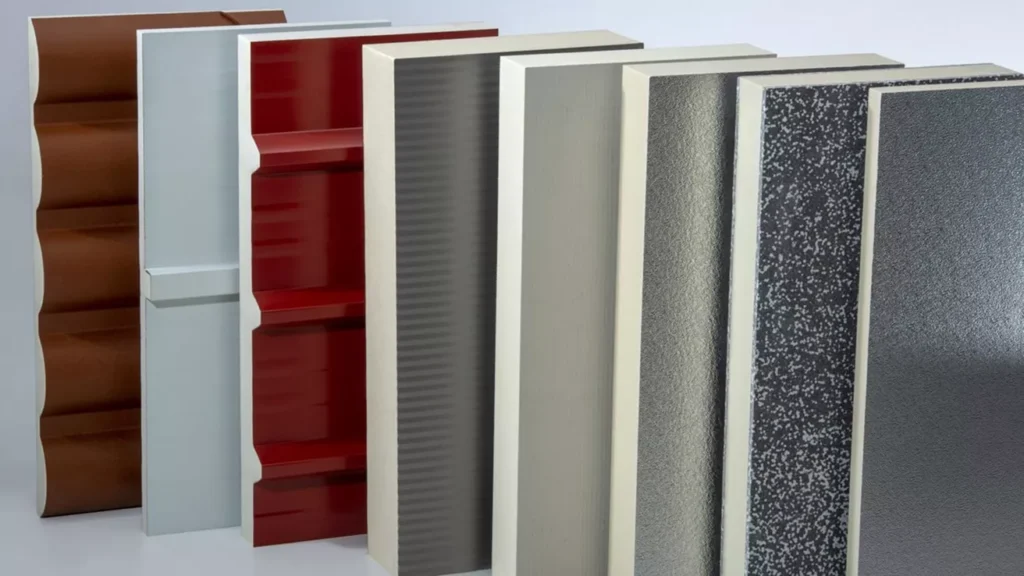
Comparing R-values for insulation behind vinyl siding
R-value shows how well insulation resists heat flow. The higher it is, the better the insulation. For vinyl siding, materials with higher R-values per inch are usually preferred because they provide good performance without adding too much thickness.
Exterior insulation under siding for whole-home efficiency
You have probably already understood that facade insulation carries much more value than just a new color and design. It upgrades the house in many ways, which together improve its efficiency.
Exterior house insulation under siding for new construction
In new construction, insulation under siding can be planned from the start, which makes it one of the most cost-effective solutions. It integrates seamlessly with modern building systems, meets energy code requirements more easily, and ensures long-term performance.
Exterior siding insulation for home retrofits
For old houses, adding insulation during a renovation is a good opportunity to enhance energy efficiency. This method also makes the house more comfortable, reduces drafts, and enhances wall protection without intervention into an interior living space.
Long-term savings with exterior insulation systems
Although insulation requires an initial investment, it provides long-term savings through lower energy and maintenance costs and increased home value. Over time, these systems pay for themselves by improving the home’s durability and overall performance.
How to choose the right insulation for siding
Choosing the right insulation depends on several key factors, including climate, budget, and your home’s overall design.
Climate, budget, and home design considerations
Climate plays a major role in insulation selection. Colder regions require higher R-values and better air sealing, while warmer climates benefit from breathable materials that manage heat and moisture effectively.
The budget is also very important. If you are on a budget, try to choose options that will include a full range of features that your home needs and are reasonably priced.
Home design and wall structure can further influence which insulation type will work best.
Matching insulation for siding with siding materials
Different materials work best with certain types of siding insulation. Vinyl siding pairs well with rigid foam boards and insulated panels, while fiber cement and wood siding often benefit from breathable insulation systems. Choose wisely, take details into account.
Professional installation vs DIY solutions
And the most important thing is choosing high-quality materials and equipment. If you want your house to serve you for a long time, never skimp on self-made insulation. Poor installation can reduce insulation performance and lead to long-term issues.
Final thoughts on siding insulation
Summing up the article, we can confidently say that in our day, when technologies allow us to ensure the safety and comfort of our homes, homeowners and people considering buying or building a house should also consider siding insulation.
This solution solves several problems at once, such as updating the facade design, providing the house with warmth in winter and coolness in summer, improving energy efficiency, and preventing mold.
And if you still hesitate, just call us. We will help you choose siding and install insulation on your house.
FAQ
Yes, insulated siding really works, but with one important condition. It works best as part of a complete insulation system. Insulated siding improves energy efficiency by reducing heat loss, minimizing air leaks, and protecting walls from temperature changes.
The siding color that never goes out of style is white or light neutral tones like light gray and beige. They combine with all architectural styles and will never go out of fashion.
Even with insulation, a house can feel cold because of air leaks, thermal bridges, or gaps in the insulation, so warmth doesn’t stay inside.