Fire is one of the most serious risks for any home, especially in dry climates, foothill communities, and areas where wind-blown embers can travel far ahead of visible flames. Exterior walls are often exposed to radiant heat, direct flame contact, nearby burning fences or decks, and small embers that collect in gaps around trim, vents, and roof-to-wall intersections. That is why fire resistant siding should be treated as part of a complete home-hardening strategy, not just as an exterior design upgrade.
The right siding material can reduce the chance of ignition, slow flame spread across the wall assembly, and help protect vulnerable structural components behind the exterior cladding. In this guide, we’ll explain how fire-resistant siding works, which materials perform best, where installation details matter most, and why “fireproof siding” should be understood as a protective upgrade rather than a guarantee that a home cannot burn.
Key benefits of fire resistant siding for wildfire and home safety
Fire safety should be one of the first considerations when choosing exterior cladding, especially for homes in Northern California and other wildfire-prone regions. Fire-resistant siding is designed to reduce ignition risk and limit how quickly flames can travel along the exterior wall. When combined with proper flashing, sealed joints, maintained trim, and professional siding installation, it can make the home’s exterior more resilient during ember exposure and nearby fire events.
The strongest benefit comes from choosing noncombustible or ignition-resistant materials such as fiber cement, stucco, masonry, brick veneer, or metal siding. These materials do not add fuel to the fire in the same way as untreated wood or vulnerable plastic-based cladding. For homes near dry vegetation, fences, decks, sheds, or neighboring structures, this can reduce the chance that a small ignition point turns into full exterior wall involvement.
Fire-resistant house siding also helps limit flame spread on the facade. If exterior walls resist ignition, fire is less likely to move quickly toward eaves, windows, attic vents, and roof edges. These areas are common weak points during wildfire exposure, so a better siding system can support safer evacuation time, reduce structural damage, and give firefighters a more defensible building envelope to work around.
Another major advantage is improved resistance to radiant heat. During a nearby fire, siding may be exposed to intense heat before flames ever touch the house. Materials such as fiber cement and stucco are more stable under heat than vinyl, which can deform or melt, and untreated wood, which can ignite. This helps protect sheathing, framing, and wall cavities from early exposure.
Fire-rated siding may also support long-term property value because buyers and insurers increasingly pay attention to exterior resilience, defensible space, and home-hardening upgrades. Insurance savings are not guaranteed and depend on the carrier, location, and full condition of the property, but a documented upgrade to ignition-resistant siding can be a useful part of a broader risk-reduction profile.
Most importantly, fire resistant house siding gives homeowners a more practical layer of protection. It will not make a home completely fireproof, but it can reduce one of the most important exterior vulnerabilities: combustible wall cladding that allows flames or embers to move into other parts of the structure.
Best types of fire-resistant siding for homes
Not all siding materials perform the same way under fire exposure. Some are noncombustible, some are ignition-resistant, and others are mainly used because they are affordable or common, even though their fire performance is limited. Before choosing a product, homeowners should compare fire rating, local WUI code requirements, maintenance needs, appearance, cost, and manufacturer installation specifications.
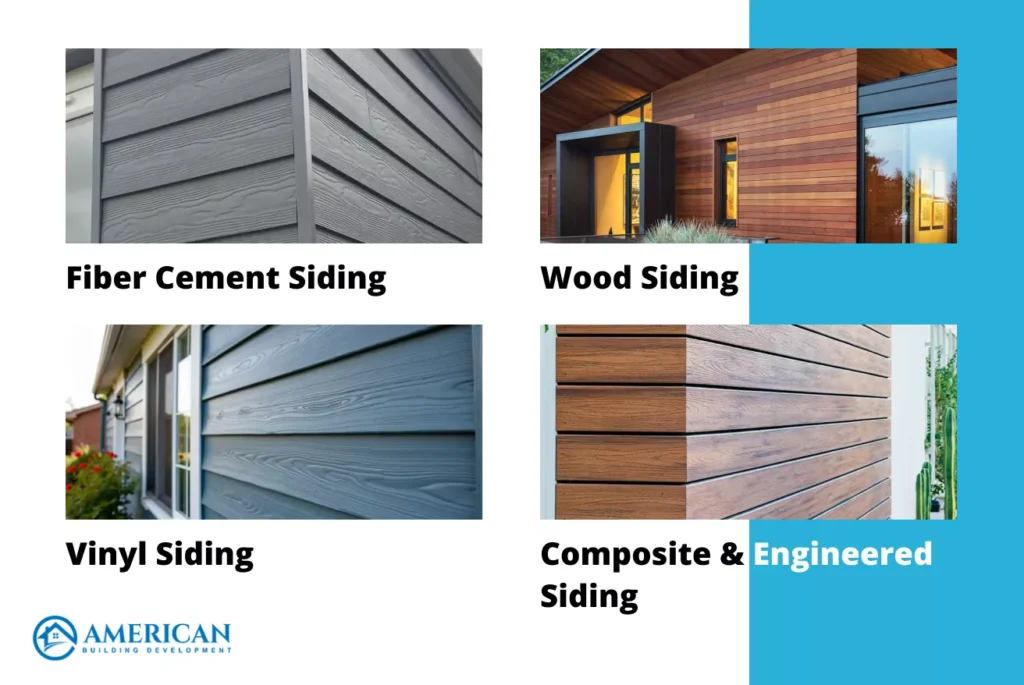
Fiber cement siding
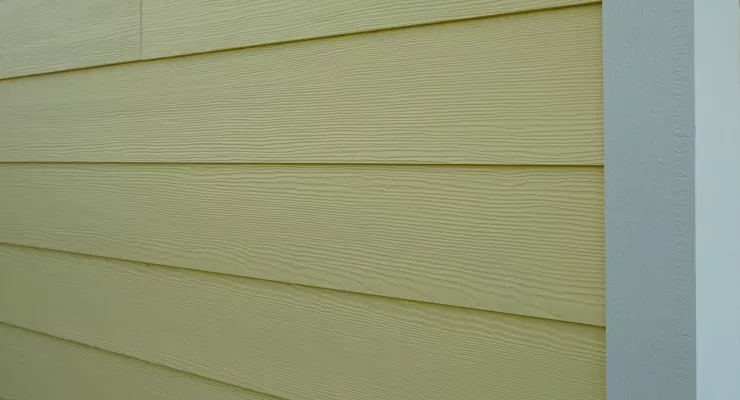
Fiber cement siding is one of the most practical choices for fire-resistant exterior cladding. It is made from cement, sand, water, and cellulose fibers, giving it a dense mineral-based structure that performs much better around heat and flame than vinyl or untreated wood. It is also popular because it can imitate wood grain, lap siding, board-and-batten, or modern panel styles while offering stronger fire resistance. For homeowners comparing materials, our fiber cement vs vinyl siding guide explains the durability, maintenance, and fire-resistance differences in more detail.
It can be used for full exterior replacement or for targeted upgrades in vulnerable areas such as lower wall sections, roof-to-wall intersections, walls near decks, and surfaces close to fences or outbuildings.
Wood siding
Wood siding offers a natural appearance, but untreated wood is combustible and should not be considered a fire-resistant siding option on its own. Fire-retardant-treated wood or approved coatings can improve performance, but they require correct application, maintenance, and periodic inspection. In higher-risk locations, wood is usually less protective than fiber cement, stucco, masonry, brick veneer, or metal.
Vinyl siding
Vinyl siding is common and budget-friendly, but it should not be described as fire-resistant siding. It may soften, deform, or melt under high heat, which can expose the sheathing, trim, and framing behind the panels.
Vinyl may still be used in many standard residential projects, but homeowners in wildfire-prone areas should understand its limitations. If vinyl remains in place, the wall assembly should be inspected for gaps, deteriorated trim, missing flashing, and combustible materials near the siding. Where risk is higher, replacing vinyl with fiber cement, stucco, or another ignition-resistant material is usually the safer upgrade.
Composite and engineered siding
Composite and engineered siding products vary widely. Some include wood fibers or polymers, while others use mineral-based components and additives designed to improve durability or fire performance. Because “engineered” does not automatically mean fire-resistant, homeowners should review the product’s fire testing, code approvals, warranty conditions, and manufacturer instructions before choosing it for a high-risk area.
Overall, the best fire resistant siding for homes depends on the property’s exposure level, local building requirements, surrounding vegetation, nearby structures, budget, and desired appearance. For many homeowners, fiber cement, stucco, masonry, brick veneer, or metal siding offers the strongest balance of safety, durability, and design flexibility.
How fire resistant siding should be installed for maximum protection
Even the best fire resistant siding can underperform if it is installed with open joints, weak trim details, missing flashing, or unprotected wall cavities. Fire protection depends on the entire wall assembly: siding, underlayment, sheathing, fasteners, clearances, trim, penetrations, and maintenance. The goal is to reduce places where embers, heat, or flame can reach combustible materials behind the cladding.
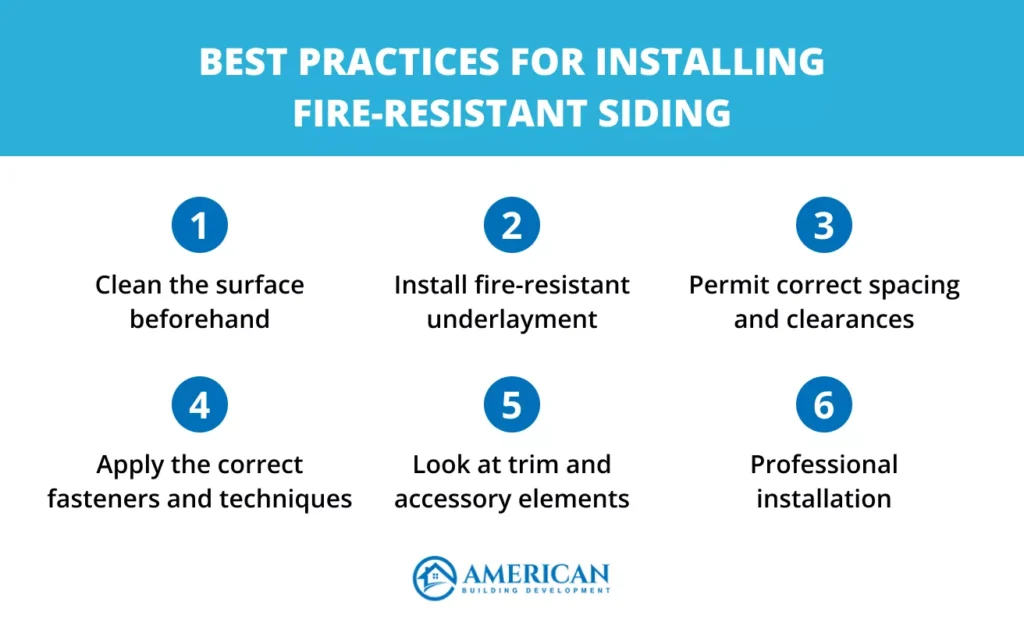
1. Clean the surface beforehand
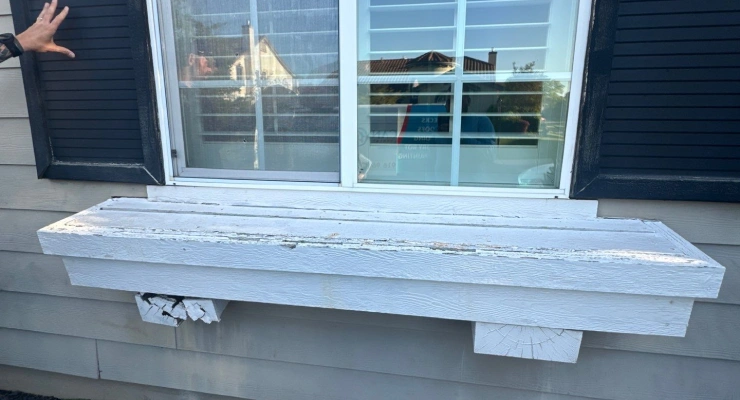
Before installation, the wall surface should be inspected for dry rot, cracks, soft sheathing, moisture damage, gaps, and loose trim. Installing new siding over damaged substrate can trap problems behind the facade and reduce the safety value of the upgrade. Any weak or deteriorated areas should be repaired before fire-rated siding is installed.
The condition of the crate or frame also needs to be checked, as it bears the greatest share of the siding’s load.
2. Install fire-resistant underlayment
A properly selected weather barrier, fire-rated sheathing where required, and compatible underlayment can improve the wall assembly behind the siding. This layer is especially important around penetrations, roof-to-wall intersections, decks, and wall sections where wind-driven embers can accumulate. The material must be compatible with the siding product and local code requirements.
The material overlap should also be in accordance with the recommendations during installation, and the joints should be firmly fixed.
3. Permit correct spacing and clearances
Correct spacing and clearances are critical. Siding expands, contracts, and moves differently depending on the material, so panels should be installed with the manufacturer’s required gaps, overlaps, and clearances. Extra attention should go to windows, doors, corners, rooflines, penetrations, deck-to-wall intersections, and the bottom edge of the wall, where embers and debris often collect.
4. Apply the correct fasteners and techniques
Fasteners should match the siding manufacturer’s specifications for material, length, spacing, corrosion resistance, and placement. Overdriven fasteners, incorrect nails, or panels locked too tightly can lead to cracking, buckling, water intrusion, and compromised fire performance. A stable facade is not only about appearance; it also helps keep protective layers closed and properly aligned.
5. Look at trim and accessory elements
Trim, starter strips, corner boards, flashing, soffit transitions, and accessory pieces should be treated as part of the fire-resistance system. Weak trim details can create small openings where embers enter or collect. Noncombustible trim and metal flashing are especially important near decks, roof-to-wall areas, and the lower part of exterior walls.
All accessories should also be compatible with the chosen siding type and possess a decent level of fire resistance.
6. Professional installation
For the best protection, fire resistant siding should be installed by experienced exterior professionals who understand local climate, manufacturer requirements, and building-code details. The ABD team can inspect the existing wall condition, recommend the right material, correct damaged areas, and handle siding repair and replacement so the finished facade is durable, clean, and built for long-term performance.
Common misconceptions about fire resistant and fireproof siding
Despite the increased interest in fire resistant siding, many misconceptions persist about it. Through them, the homeowners are able to either overrate the material’s ability or otherwise under-rate its benefits. Knowledge of common myths would guide us to make better decisions.
The biggest misconception is that fireproof siding makes a home impossible to burn. In reality, siding is only one part of the building envelope. It can reduce ignition risk and slow flame spread, but home safety also depends on roofing, vents, eaves, windows, decks, fences, defensible space, and maintenance. For homeowners in California, CAL FIRE’s Home Hardening guidance is a useful external resource for understanding how siding fits into a broader wildfire-resilience plan.
Another common mistake is assuming that a noncombustible material automatically creates a fire-safe wall. If the siding has open gaps, missing flashing, exposed combustible trim, damaged sheathing, or unsealed penetrations, embers can still reach vulnerable areas. Fire-resistant siding performs best when the entire exterior system is installed and maintained correctly.
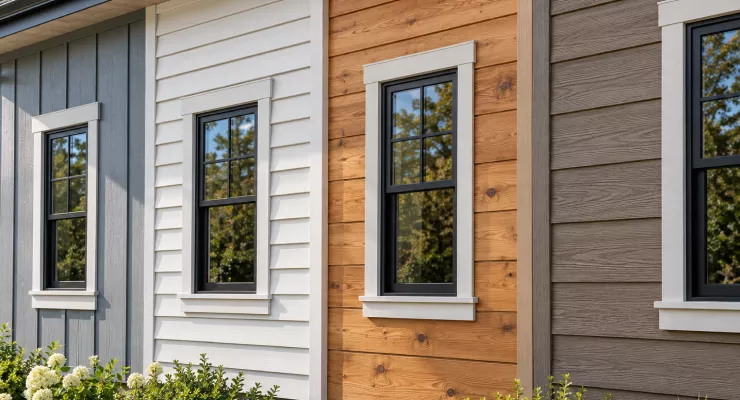
Some homeowners also believe fire-resistant siding limits curb appeal. That is no longer true. Fiber cement and other modern cladding options are available in lap siding, board-and-batten, shingle-style panels, smooth architectural panels, and wood-look textures. A home can gain better fire performance while still matching traditional, modern farmhouse, craftsman, or contemporary exterior styles.
Fire-resistant siding still needs maintenance. Homeowners should clean debris from wall edges, repair cracks or impact damage, inspect caulking and flashing, repaint materials when required, and remove combustible items stored against the home. Even a strong siding product can lose effectiveness if gaps, rot, or accumulated debris are ignored.
Cost is another misunderstood point. Fire-resistant siding can cost more upfront than basic vinyl, but the value should be measured across lifespan, maintenance, risk reduction, curb appeal, and potential replacement costs after heat or fire damage. For many homes, fiber cement or stucco provides a stronger long-term return than repeatedly repairing vulnerable cladding.
In short, fireproof siding is not a standalone solution, but it is one of the most important exterior upgrades a homeowner can make. The best result comes from choosing the right material, installing it correctly, and combining it with defensible space, ember-resistant details, and regular exterior maintenance.
Conclusion
Fire-resistant siding is a smart investment in safety, durability, and long-term exterior performance. It helps reduce ignition risk, limits flame spread across the facade, improves resistance to heat exposure, and can make the home’s exterior more resilient during wildfire conditions. The strongest options, such as fiber cement, stucco, masonry, brick veneer, and metal, also offer excellent design flexibility and long service life.
If you are planning to replace old siding, upgrade a vulnerable exterior, or prepare your home for a higher level of wildfire resilience, ABD can help you choose and install the right fire resistant siding system for your property. A professionally built exterior gives your home better protection, stronger curb appeal, and more confidence for the future.
FAQ
Fire-resistant siding is exterior cladding made from noncombustible or ignition-resistant materials that are less likely to ignite when exposed to embers, radiant heat, or nearby flames. Its purpose is to reduce ignition risk, slow flame spread, and protect the wall assembly behind the siding.
Many fire-resistant siding materials can last for decades, but lifespan depends on the product, installation quality, climate, maintenance, and exposure conditions. Fiber cement and stucco often provide long service life when installed correctly and inspected regularly.
Yes. Modern fire-resistant siding is available in many colors, profiles, textures, and panel formats. Fiber cement can imitate wood grain, shingles, lap siding, board-and-batten, or smooth modern panels, allowing homeowners to improve fire performance without sacrificing curb appeal.
Some fire-resistant siding options can support a more sustainable exterior because they last longer and may reduce replacement waste over time. Fiber cement, metal, masonry, and stucco each have different environmental profiles, so the best choice depends on durability, local climate, maintenance needs, and product sourcing.