The selection of a siding option for your home cannot be considered a mere style issue. It has the potential to influence the lifespan of your house, maintenance expenses, and future for decades. Today, two of the most popular options are fiber-cement siding and vinyl siding. The two materials are similar in their benefits, yet they operate in vastly different ways. Fiber-cement siding is geared towards resistance and durability; the other is geared towards low costs and maintenance.
This article will examine the differences between fiber cement siding vs vinyl to assist homeowners in making the right choice.
Understanding the basics: What are fiber cement vs vinyl siding?
What is fiber cement siding?
Fiber cement siding is a coating material that is composed of cement, sand, water, and cellulose fibers. The production process combines all components, which are then molded into panels of different sizes and types. The surface can be given different textures to achieve a specific look. The panels are solid and stable in shape and can be used as an exterior wall coating for a house.
This siding is available in various formats. The most widespread are horizontal boards mounted one above another. There are also large panels that occupy considerable sections of the wall, and others that resemble single tiles. This enables the material to be incorporated into several architectural solutions, from modern to classic.
Fiber cement may be provided with pre-made color or a primer coating, over which the top paint is applied on site. There are also collections of manufacturers with pre-applied colors. So you can now install the panels instantly with no extra effort.
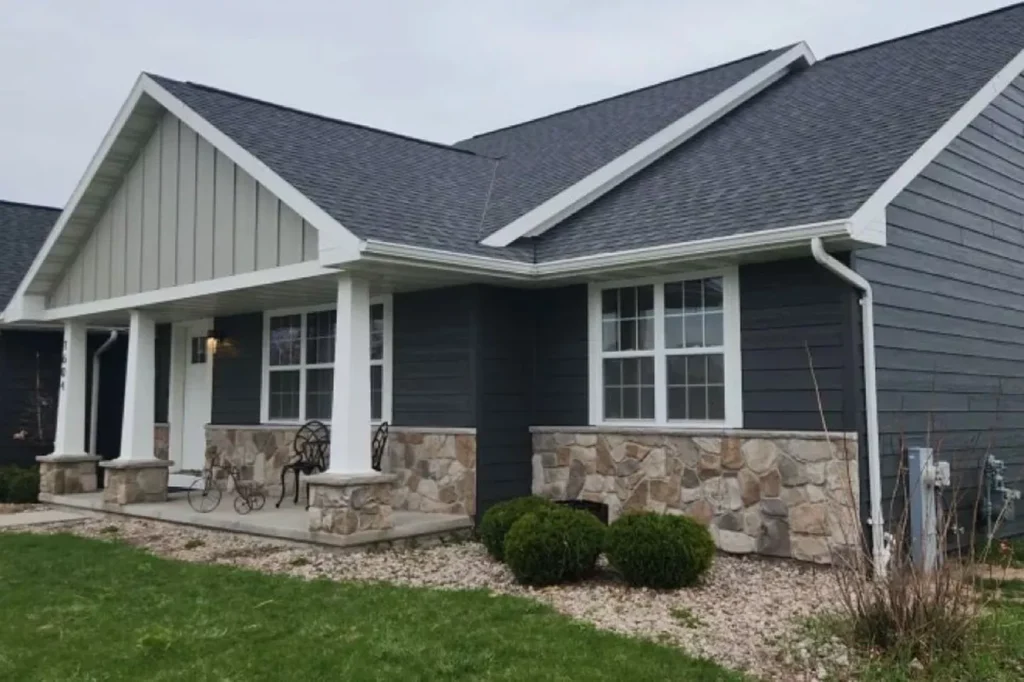
Because of the manufacturing technology, the thickness and shape of fiber cement siding are stable. This would enable the craftsmen to fit the panels accurately during installation. The material is cut with tools appropriate for cement or composite boards. The panels are either connected to the substructure or directly to the walls, depending on the type of installation and the house’s construction.
Fiber cement is applicable to new houses and renovations. The content can be used across many architectural styles due to its wide variety of formats and textures. It also does not clash with other facing materials, hence it is mostly combined with them as a facade composite.
As a manufactured product, there is a definite number of models available from manufacturers. They vary in thickness, size, surface design, and color. This will enable you to customize the content to certain requirements, so you get tailored solutions.
Comparing the fiber cement vs vinyl siding, fiber cement siding is a construction material that is available in panel or slab form and is intended to cover exterior walls. It is generally defined as a mixture of a cement base and fibrous additives that form pre-assembled pieces for use on the facade.
What is vinyl siding?
Vinyl siding is a chloride polyvinyl (PVC). In the manufacturing process, the plastic material is extruded: it is forced through a mold, forming long strips of a given profile. The panels are then textured and shaped, and the color selected, which is incorporated into the material during manufacturing.
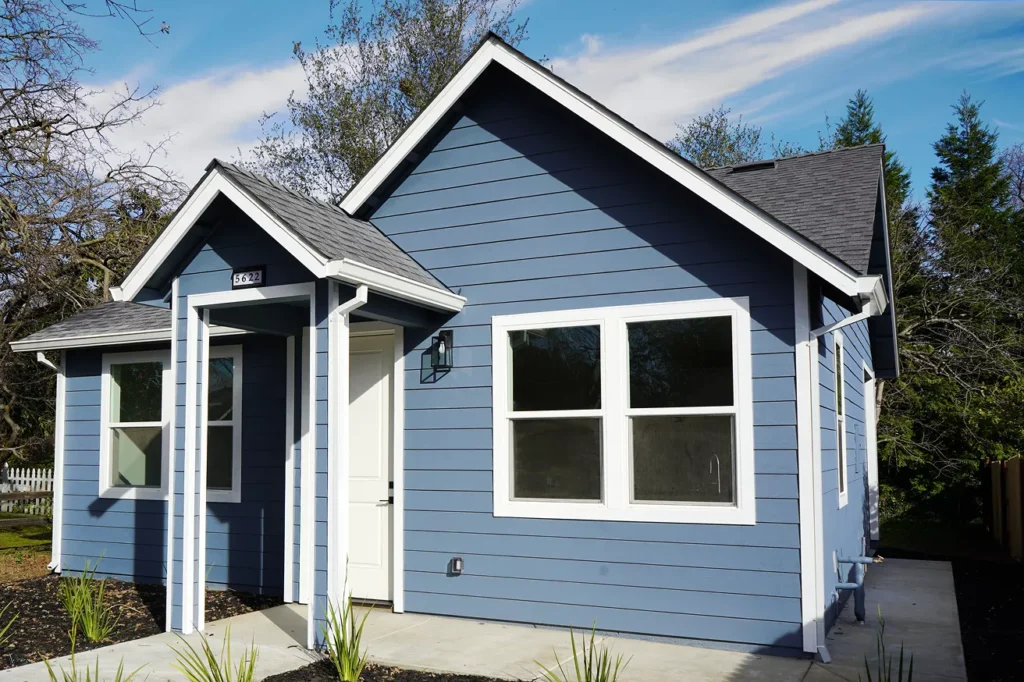
Vinyl is built on a plastic structure that produces light, flexible panels. Outside, they may be smooth or in relief, which resembles wooden boards. The panels come in long strips with special locks and holes to fit. The design allows connecting the elements and creating a complete facade surface.
In general, vinyl siding is available in standard profile sets, with the most common being horizontal panels. There are also vertical options and, in some cases, decorative solutions that resemble shingles or small wooden tiles. The manufacturers offer numerous color choices, and the panels are already pre-assembled.
Vinyl siding is installed by either attaching the panels to the wall surface or a special batten. The length of the panels will allow them to cover a large portion of the wall without a substantial number of joints. The panels have a locking system that enables them to be incorporated into a single coating, delivering the integrity of the facade.
In fact, vinyl is applied in different kinds of buildings – from small commercial buildings to individual home constructions. It is often an external cladding applied over underlying wall materials such as wood, plasterboard, or old structures.
Discussing vinyl siding vs fiber cement battle, vinyl siding is so popular because of its standard sizes, comprehensible panel format, affordable price, and a large number of ready sets. Customers can choose from various profiles, shapes, and colors based on the ready-made production solutions.
Fiber cement siding vs vinyl siding: Side-by-side comparison
Fiber cement can be considered a more environmentally friendly solution, whereas vinyl is cheaper but less sustainable. Thus, it depends on what matters more to the owner, either durability or economy, to decide on which one to take.
Durability & longevity
Vinyl siding vs fiber cement siding differ fundamentally in service life, as evidenced by several years of use. Fiber cement is formed from firm mineral constituents; hence, it is solid, durable, and meant to be used for a long time. It has an average service life of 40-50 years, and in some cases, the manufacturer may provide additional protective coverings. The material withstands seasonal changes and maintains its shape even under long-term use.
Vinyl siding lasts less. The service life is typically 20-30 years, depending on the manufacturer and climate. Changes in temperature affect the plastic base, so the material might wear out more quickly under other conditions.
Nevertheless, vinyl is also used because it is cheap and easy to replace. Fiber cement is superior to vinyl in terms of resistance and durability in general, but vinyl can be a compromise between price and a reasonable service life.
Appearance & style options
In terms of appearance, the difference between vinyl vs fiber cement siding is quite obvious at first glance. Fiber-cement panels can mimic wood, stone, or a smooth surface with a high level of detail. The textures are natural, so the material is commonly used in houses with a classic or superior style. It also combines well with other adjoining materials – stone, metal, and decorative panels.
Vinyl siding can be painted in many colors and comes in multiple profiles with less realistic textures. It is a nice material that does not look like natural wood or cost much, so it is realistic. Vinyl would be a better choice for modern, low-end, and standard residential applications where functionality is paramount.
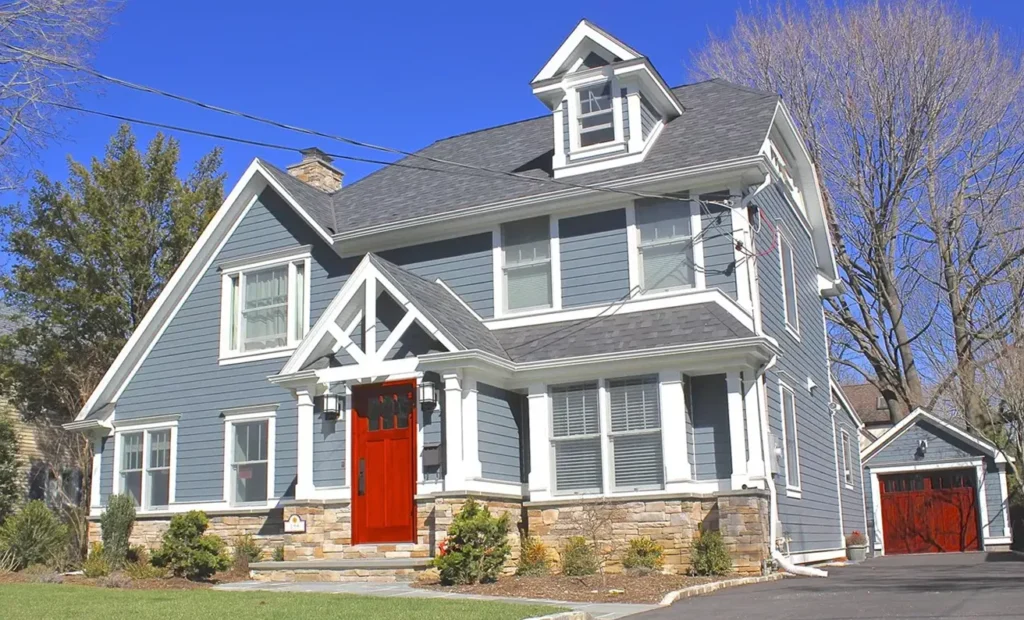
If the key consideration is the most natural and stylish appearance, fiber cement clearly has the edge. If the choice of colors and availability matter, vinyl offers more ready-made options at a lower cost.
Maintenance requirements
Another important point of difference between fiber cement siding vs vinyl siding is the maintenance needs. Fiber cement siding requires minimal maintenance, but it may need painting every now and then if the surface fades over time. The panels are stable, so the main level of maintenance is limited to washing the facade and ensuring the paint remains in good condition over time.
Vinyl siding has practically no maintenance. The color is inherent in the substance, so it does not need to be painted that often. Water cleaning is minimized to periodic cleaning. It should be borne in mind, though, that if the panel is damaged or deformed, the entire panel needs to be replaced, as local vinyl repair is virtually impossible.
Consequently, fiber cement requires a bit more care in the long term, whereas the most convenient option that is easy to maintain is vinyl siding.
Installation process
The installation of cement board siding vs vinyl differs in technical aspects and is also more complex. Fiber cement panels are very heavy, so the work requires workers and special tools to cut hard boards. Improved accuracy and observation of the technology are required during installation to maintain the material’s protective characteristics. This results in time wastage and a higher service cost.
The vinyl siding can be installed more quickly with the ABD team. The panels are light and foldable, and a locking mechanism allows them to be connected together very quickly. Due to this reason, vinyl installation is usually low-cost and less time-consuming. To many homeowners, this is a swinging argument.
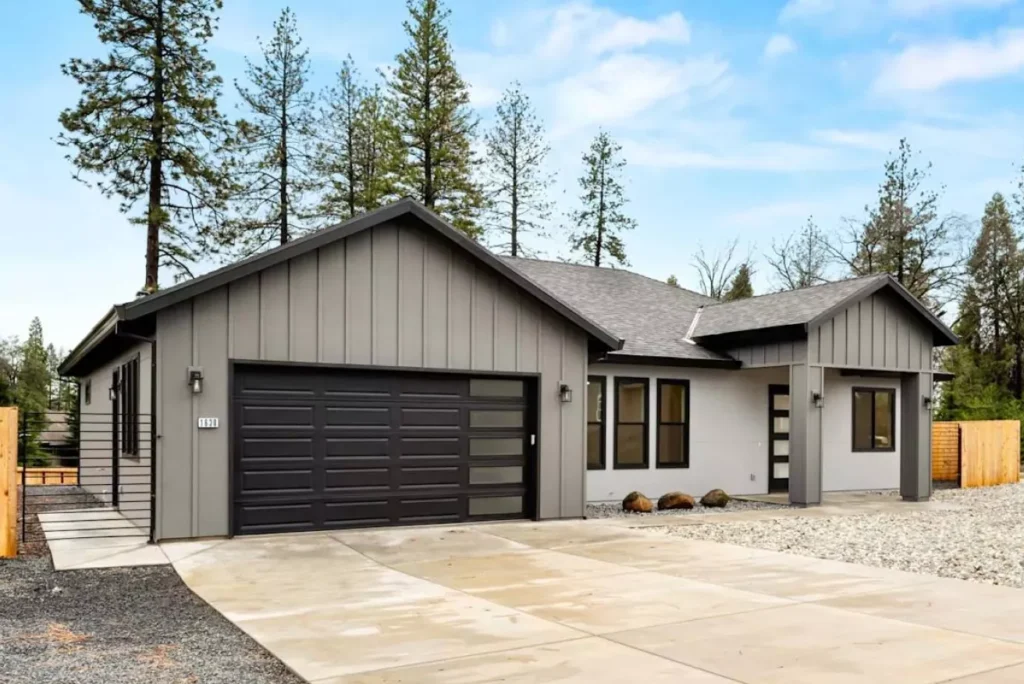
In this way, fiber cement can be used by professional crews like ABD and with care during installation, while vinyl can be used for fast projects.
Environmental considerations
Fiber cement siding vs vinyl are also differentiated by their environmental impacts. Fiber cement siding consists of a base of mineral components and cellulose fibers; thus, its manufacturing is more reminiscent of natural materials. It is not plastic and does not release volatile substances during operation. Its durability ensures it is more sustainable in terms of resource consumption.
Vinyl siding is crafted from synthetic PVC, and its manufacture involves chemical processes. Recycling of vinyl is also not as easy; plastic should undergo specific recycling procedures.
Meanwhile, vinyl is not heavy, which makes transportation and installation easier, yet its environmental impact is less clear. This has led to fiber cement being seen as a more eco-friendly option, whereas vinyl remains cheap yet less environmentally friendly.
Main pros and cons of fiber cement siding vs vinyl siding
In comparing fiber cement vs vinyl siding, one should not just consider price or appearance. All materials have their own pros and cons, which influence their lifespan, maintenance, installation, and overall value to the homeowner.
Fiber cement is preferable when one is interested in durability and a high-end appearance, whereas vinyl is preferable when one needs to install and maintain the project in the shortest possible time, as well as at a low cost.
A closer examination of the advantages and shortcomings of vinyl siding vs fiber cement siding is shown below.
| Criteria | Fiber cement siding | Vinyl siding |
| Durability | 40-50+ years | 20-30 years |
| Appearance | Realistic textures, premium look | Less natural, standard profiles |
| Maintenance | Occasional repainting + cleaning | Only periodic washing |
| Material cost | Higher | Lower |
| Fire resistance | High | Low |
| Weight | Heavy material | Very lightweight |
| Environmental impact | Closer to natural materials | Plastic, more difficult to recycle |
| Style options | Wide range of textures and formats | Many colors, but simpler overall look |
Pros of fiber cement siding
- Highly resilient and dimensionally stable
- Naturalistic core and hard texture
- Resistant to the majority of outside influences and fire-resistant
- Extensive range of panel formats and design coatings
- More natural material that is less plastic in nature
Cons of fiber cement siding
- Higher price of material and installation
- Cumbersome, making it hard to move and put up
- Requires regular painting (based on the manufacture)
- More complicated procedure of cutting and installation, including particular tools
Pros of vinyl siding
- Much inexpensive to start with
- Easy weight and a fastening system that makes installation quicker
- No painting needed; it is part of the material
- High choice of colors and profiles
- Low levels of maintenance
Cons of vinyl siding
- Reduced impact and thermal sensitivity
- Not so realistic-looking as fiber cement
- Shorter service life
- A complete panel replacement is common for warping or cracks
- There is production and disposal related to the use of PVC
Final thoughts
Vinyl vs fiber cement siding are alternative exterior home design options that are appropriate for various situations and priorities. Fiber cement is a powerful force in terms of durability, fire resistance, and the possibility of creating the appearance of natural materials. Vinyl can easily suit you if your main requirements are a budget, fast service, and minimal maintenance.
No one-fit-all-purpose solution – at ABD, we never ignore climate conditions, long-term plans, and available budget. When the material is properly selected, both vinyl and fiber cement options secure the house and add style and value.
FAQ
Fiber cement siding is believed to be stronger, more fire-resistant, and more resistant to mechanical damage than vinyl siding. It is less sensitive to heat, cold, and high impact, and more natural in appearance. It is, however, more costly and harder to install.
The primary shortcomings of fiber cement siding are increased cost, raised weight, and a more complex installation system. The material requires a professional installation, which adds to the project’s cost. It can also require several years of painting, particularly in harsh climates.
Vinyl siding can be replaced with fiber cement. This is a common practice, particularly when owners desire a more durable material. The status of the crate and walls is normally inspected before installation to ensure that the increased weight of fiber cement doesn’t exceed the walls’ capacity.