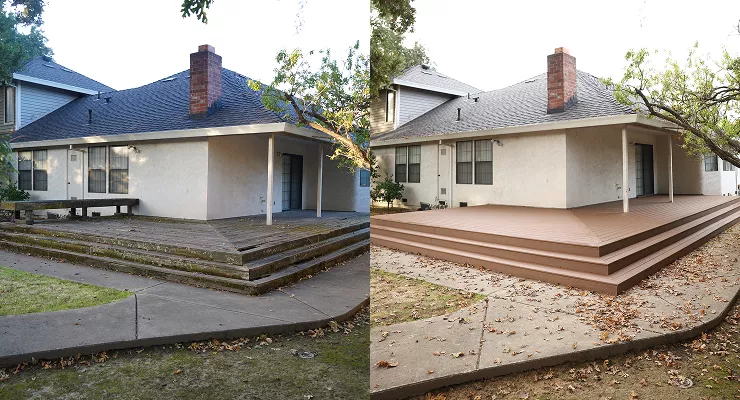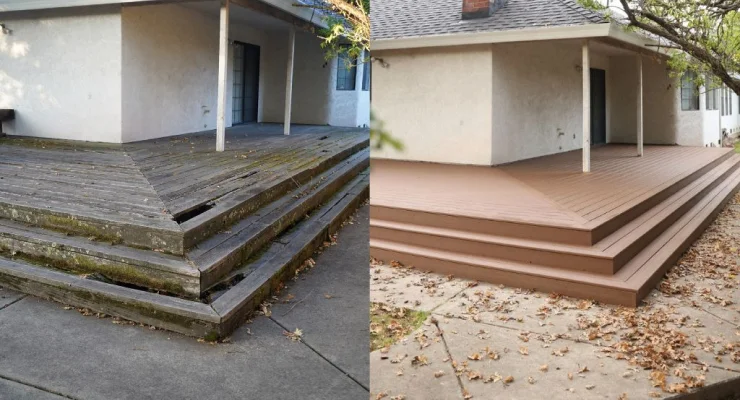
Choosing the best outdoor decking material goes beyond looks or budget. You need a material that holds up against your local climate, handles daily wear, and keeps its appearance for years — not just months. In California’s Sacramento Valley, that means standing up to dry, hot summers and wet winters without warping, fading, or rotting.
This guide compares five types of decking boards — natural wood, hardwood, composite, PVC, and aluminum — across lifespan, cost, maintenance, and climate performance. Each section includes comparison tables so you can weigh the trade-offs side by side and pick the right material for your deck project.
Understanding the best decking material for long-term performance
It is important to understand what makes a good decking board. This will help you make a choice from the very beginning, based on specific characteristics and an understanding of your own needs.
A quality material will not sag under the weight of people and furniture, will not crack from mechanical stress, will be resistant to any precipitation, and will not be subject to rot and mold.

What is the best decking material for durability and value
For most homeowners in 2026, composite decking offers the strongest balance of durability and value. It typically lasts 25–30 years, resists rot, mold, insects, and UV damage, and comes at a mid-range price point. That said, the right choice depends on your specific climate, budget, and how much maintenance you are willing to do — which is why a direct comparison matters more than a single answer.
Overview of different decking materials on the market
The decking market in 2026 extends well beyond conventional lumber. Homeowners now choose from natural wood, engineered composites, PVC, aluminum, and thermally modified wood — each with distinct performance characteristics. Understanding these differences is essential before committing to a material, especially in regions like Northern California where temperatures regularly exceed 100°F in summer and moisture levels spike in winter.

Different deck materials used in modern outdoor design
Modern outdoor design combines aesthetics with performance, which is why decking materials are selected not only for appearance but also for durability and ease of maintenance.
Natural wood remains popular for its authentic look and tactile warmth, while composite decking has gained widespread adoption for its consistent appearance and reduced maintenance.
Aluminum and engineered wood options are increasingly used in contemporary designs where structural stability, clean lines, and resistance to extreme conditions are critical.
Types of decks material: From traditional to advanced composites
Decking materials are categorized into traditional and advanced solutions.
Traditional options, such as hardwoods, rely on natural strength and aesthetics, but often require ongoing maintenance to maintain performance.
Advanced composites and synthetic materials are engineered to overcome these limitations. They provide improved protection against moisture, UV exposure, and biological degradation.
Deck materials comparison: Strength, lifespan, and maintenance
Choosing the right decking material requires more than just comparing looks or cost. Durability, expected lifespan, and maintenance requirements determine how your deck will perform over time. Different materials react differently to environmental influences and daily use, making direct comparisons important for making smart decisions.
Deck materials comparison by climate resistance
How we compared: The ratings below are based on standardized testing data from material manufacturers, field performance in Northern California’s climate, and our team’s experience installing decks across the Sacramento region since 2006.
| Deck materials comparison by climate resistance | |||
| Material Type | Moisture Resistance | Ultraviolet Resistance | Best Climate Use |
| Natural Wood | Low–medium | Low | Dry, mild climates |
| Hardwood | Medium–high | Medium | Warm, stable climates |
| Composite | High | High | Mixed climates |
| Polyvinyl Chloride (PVC) | Very high | Very high | Wet, humid, coastal |
| Aluminum | Extremely high | Extremely high | Extreme climates |
Deck materials comparison by cost over time
Estimating the cost of decking materials over time reveals significant differences beyond the initial installation costs. Choosing the wrong flooring can cost you far more than you would have saved on cheaper or less suitable materials.
| Deck materials comparison by cost over time | |||
| Material Type | Upfront Cost | Maintenance Cost | Expected Lifespan |
| Natural Wood | Low | High | 10–15 years |
| Hardwood | High | Medium | 20–25 years |
| Composite | Medium | Low | 25–30+ years |
| Polyvinyl Chloride (PVC) | High | Very low | 30–50+ years |
| Aluminum | Very high | Very low | 40–60+ years |
Best outdoor decking boards by material category
Each material category suits different situations. Below is a breakdown by type, so you can match the material to your project — whether it is a backyard entertaining space in Roseville, a waterfront deck in Folsom, or a multi-story balcony in midtown Sacramento.
Each material category has advantages and disadvantages, rendering it suitable for specific use cases rather than universal applications.
Evaluating decking options by category allows you to more accurately assess expected performance and environmental compatibility.
Best wood for deck applications
Among natural materials, hardwoods such as ipe, teak, and coumaru are considered the best options for use on terraces. Their dense structure provides good defense against moisture, insects, and mechanical wear, unlike softwoods.
Composite and engineered options as the best outdoor deck material
Composite materials are highly adaptable to various weather conditions and can withstand mechanical damage, making them one of the best and most versatile materials for use, precisely because of their durability and reliability.

Alternative surface technologies in different deck materials
In addition to traditional wood and composite boards, there are other decking options like PVC, aluminum, and thermally modified wood that meet specific needs. PVC decking works well in wet areas because it does not rot or grow mold. Aluminum is strong and resists fire.
Best material for outdoor deck performance factors
Choosing decking materials for performance ensures long-term reliability outdoors. Environmental exposure and structural demands determine how a deck ages, functions, and remains safe.
Moisture, UV exposure, and temperature impact
The most important indicator of the effectiveness of the best decking material is its resistance to weather conditions, because we cannot control them, unlike mechanical damage.
Natural wood will mostly require regular maintenance, even if it is oiled and protected. On the other hand, composite decking is more resistant to moisture and UV, while PVC and aluminum maintain their stability and appearance even in harsh conditions.
Structural stability and load capacity expectations
Both natural and synthetic materials provide strong structural stability and durability.
Building on this, provided the board is dry and the wood species are selected correctly, the floor will not warp or sag under the weight of people. Furthermore, composite decking offers steady load-bearing strength with less expansion and contraction, while PVC and aluminum provide the best dimensional stability.

What is the best deck material for aesthetic longevity
Rational choice is important; characteristics, subtleties, and durability are key factors, but one should not forget the terrace’s aesthetic appearance, which will complement the entire house and match the siding color. Aesthetic longevity means how well a decking material keeps its appearance over time. Surface durability and color stability are just as important as how the deck looks when new.
Color retention and surface wear over time
Exposure to UV radiation and regular use can cause fading, discoloration, and surface wear.
Wood is subject to weathering and changes color over time. Although the appearance of this material is more pleasant to the touch than other decking materials. Modern composite materials and coated boards are made to resist fading and staining, and PVC decking retains its color the most.
Texture, finish, and architectural compatibility
The material’s texture will directly affect how you perceive the new renovation.
Wood is always the best choice for those who value naturalness and authenticity. While synthetic materials allow you to choose a floor from hundreds of variations of textures. So, you can find exactly what will best suit your home.
Best deck boards to use for high-traffic environments
Decks in high-traffic areas need materials that are durable, safe, and easy to maintain. How a deck holds up to regular use matters more than how it looks at first.
Residential entertaining spaces
For decks used for gatherings and daily life, composite decking is usually the best option. It combines durability, comfort, and low maintenance, standing up to frequent use while keeping a clean, consistent look.
Commercial and multi-unit outdoor areas
Commercial and multi-unit decks need materials that can handle constant use and meet higher safety standards. PVC and aluminum are often chosen here for their strength, slip resistance, and reliable long-term performance with little upkeep.
Best material for deck projects by use case
It is very important to know how different deck materials will be used. Understanding what you will be dealing with will help you make purchasing decisions based on facts, not guesswork or emotion.
Best material for outdoor decks in coastal or wet regions
In Sacramento and the surrounding valley, the primary concern is not coastal salt but seasonal rain followed by intense dry heat. Composite and PVC both handle this cycle well, while untreated wood tends to crack and split as moisture levels fluctuate.
Best outdoor decking material for extreme heat or cold
Extreme heat or cold can cause decking materials to expand, contract, or break down. Aluminum and high-quality PVC stay stable in these conditions, and composites usually perform better than wood in both hot and cold weather. What is the best decking material based on ownership goals
Your goals as a property owner will affect whether you pick decking for upfront savings, long-term value, or environmental reasons.
For Central Valley homeowners, summer surface temperature is a practical concern. Dark-colored composites can get uncomfortably hot underfoot in direct sun. Lighter colors and capped composites with thermal management features are a better fit for Sacramento-area decks.
Long-term property value and ROI
Decking materials that last longer and need less maintenance add more to your property value and return on investment. Composite, PVC, and aluminum usually do better than wood here because they cost less to maintain and last longer.
Sustainability and environmental considerations
Sustainability depends on the origin of the materials and their recyclability. Many composite decking products use recycled material, and thermally modified wood is a more environmentally friendly choice than tropical hardwoods.
Choosing the best decking material:
A strategic perspective
Choosing the best decking material means weighing up features, appearance, cost, and your long-term plans. All of which makes it a strategic decision.
Aligning material choice with performance expectations
Understanding how each material performs under specific environmental conditions and usage methods sets realistic expectations and ensures better long-term results.
Final comparison of different decking materials
There is no single best decking material for every situation. The right choice depends on your climate, budget, maintenance tolerance, and how long you plan to use the deck.
That said, here is a practical summary:
- Best all-around choice: Composite decking — strong balance of durability, appearance, and cost for most residential projects.
- Best for maximum lifespan: PVC or aluminum — 30–50+ years with minimal maintenance.
- Best natural look: Hardwoods (ipe, teak) — authentic wood aesthetics, but require regular upkeep.
- Best budget option: Pressure-treated wood — lowest upfront cost, but highest long-term maintenance expense.
If you are building or replacing a deck in Sacramento, Auburn, or anywhere in Northern California, our team can help you evaluate materials based on your specific property and budget.
FAQ
Composite decking is the top choice for most homeowners in 2026. It offers 25–30 years of lifespan, strong resistance to moisture and UV, and requires minimal maintenance. PVC is a close second for wet or coastal climates.
PVC and aluminum decking last the longest — typically 30–50+ years. They resist moisture, rot, insects, and extreme weather without needing sealing or staining.
Yes, for most projects. While composite costs more upfront than pressure-treated wood, it eliminates annual staining, sealing, and repair costs. Over a 20-year period, total cost of ownership is usually lower than wood.
Poor drainage, trapped moisture underneath the boards, excessive heat buildup from dark colors in direct sun, and improper installation are the most common issues. Proper ventilation and correct fastener spacing prevent most problems.
PVC decking requires the least maintenance — no sealing, staining, or sanding. Occasional cleaning with soap and water is sufficient to keep it looking new.
Lighter-colored composite or PVC decking works best in hot climates. Dark materials absorb more heat and can become uncomfortable underfoot. Capped composites with heat-reflective technology are specifically designed for high-temperature regions.