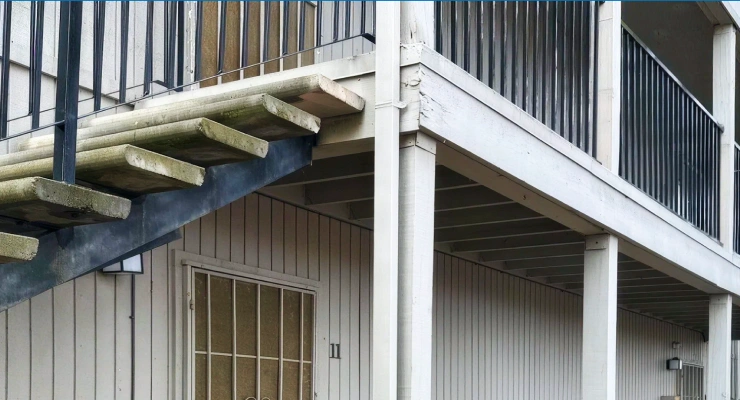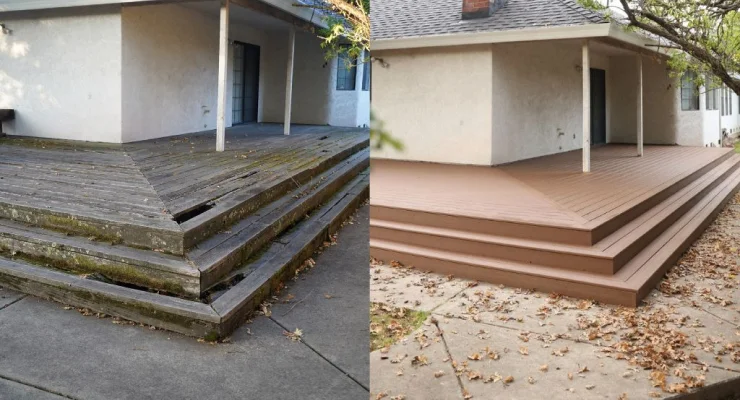
How long does a deck last? With consistent sealing and maintenance, wood decking can last roughly 10–30 years depending on species: pressure-treated pine is typically around 10-15 years, while cedar and redwood can reach 15-30 years with proper care.
Elevated decks are different: their lifespan depends heavily on how long the waterproofing system protects the structure below – an important factor many homeowners overlook.
California is hard on decks in a specific way. Dry summer UV bakes and grays unsealed boards, then winter rain drives moisture into every check and split – and into the ledger, joist, and post connections you can’t see. Boards can look serviceable at year twelve while the rim joist behind the siding is already crumbling.
That gap between how a deck looks and what’s happening underneath is where the real answer lives.
How Long Does a Deck Last?
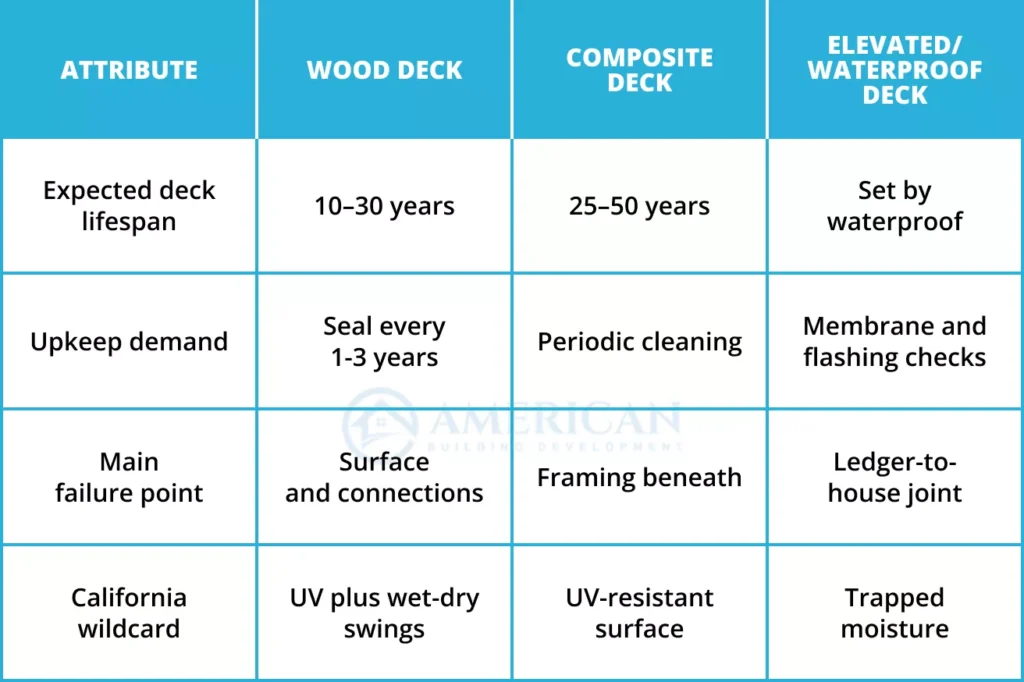
Here’s the short answer: a wood deck lasts 10-30 years with consistent upkeep, a composite deck runs 25-50 years depending on the product line, and the lifespan of an elevated deck depends on both the decking material and the condition of its waterproofing, flashing, drainage, and structural connections. A second-story deck with a properly flashed ledger can outlive the boards on top of it. One without flashing may develop concealed moisture damage much earlier than expected.
So why do published numbers vary so much? Because most sources are rating the surface, not the structure. Pressure-treated pine boards generally last 10 to 15 years, while composite boards average closer to 25 years. Your framing follows different rules.
Those ranges shift once you factor in California’s specific climate swings, starting with wood.
How Long Does a Wood Deck Last in California?
Expect 10-30 years. Pressure-treated lumber generally lasts about a decade in California conditions, depending on upkeep; cedar or redwood, sealed on schedule, can last 15-30 years. Miss the refinishing cycles, and you can cut either number close to half.
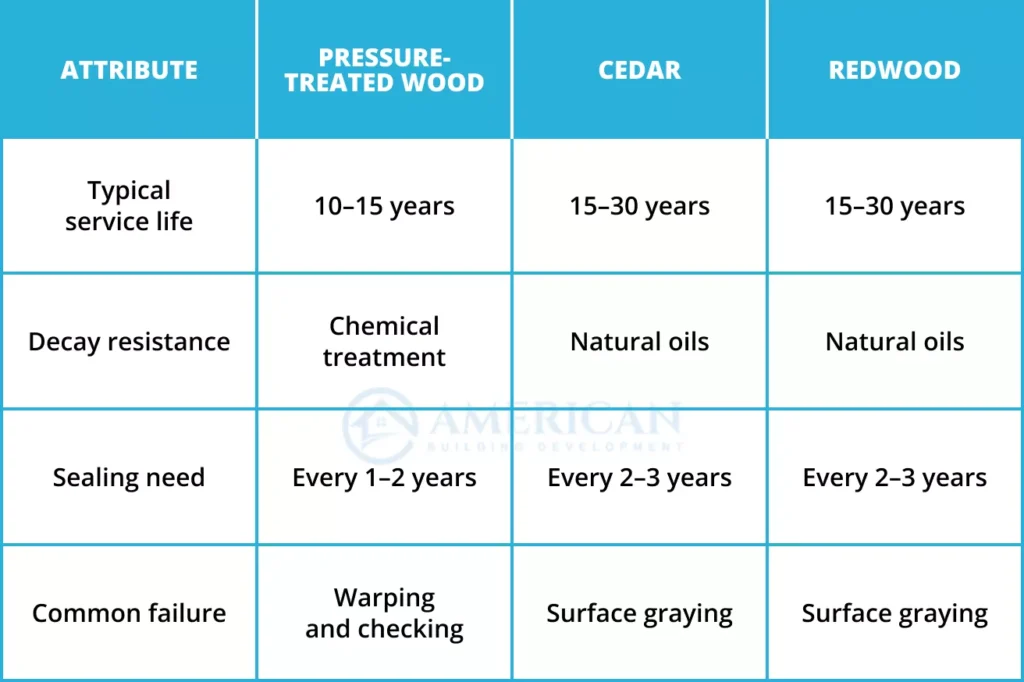
California’s dry summers do the first round of damage. UV breaks down lignin, the polymer that gives wood its rigidity, leaving boards brittle and gray before winter rain arrives. Then that unsealed surface absorbs moisture and swells, dries, and splits.
So how long does a wooden deck last when the framing gets wet? Less than the surface suggests, in most cases. Trapped moisture at ledger, joist, and post connections rots the structure. At the same time, the boards still look serviceable – the exact scenario behind most dry rot repair services calls on Sacramento-area decks.
Composite decking avoids many of the surface maintenance issues associated with wood boards. However, the framing underneath may still be wood and remains vulnerable to moisture at joists, ledgers, posts, and connections.
How Long Does a Composite Deck Last in California?
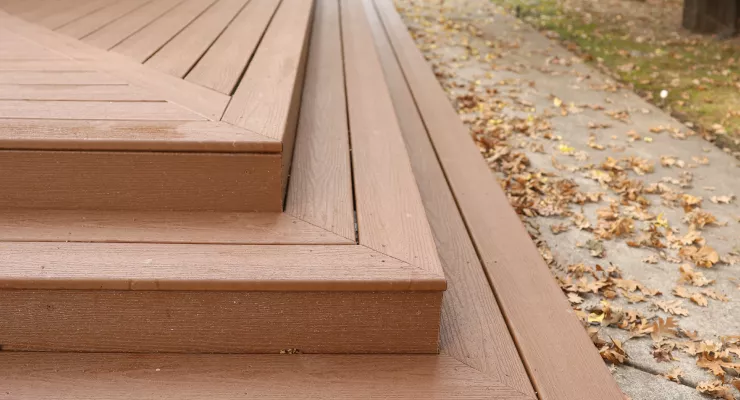
Composite decking typically has a longer service life than wood. A typical service-life estimate is about 25–50 years depending on the product, installation, exposure, maintenance, and the condition of the framing beneath it.
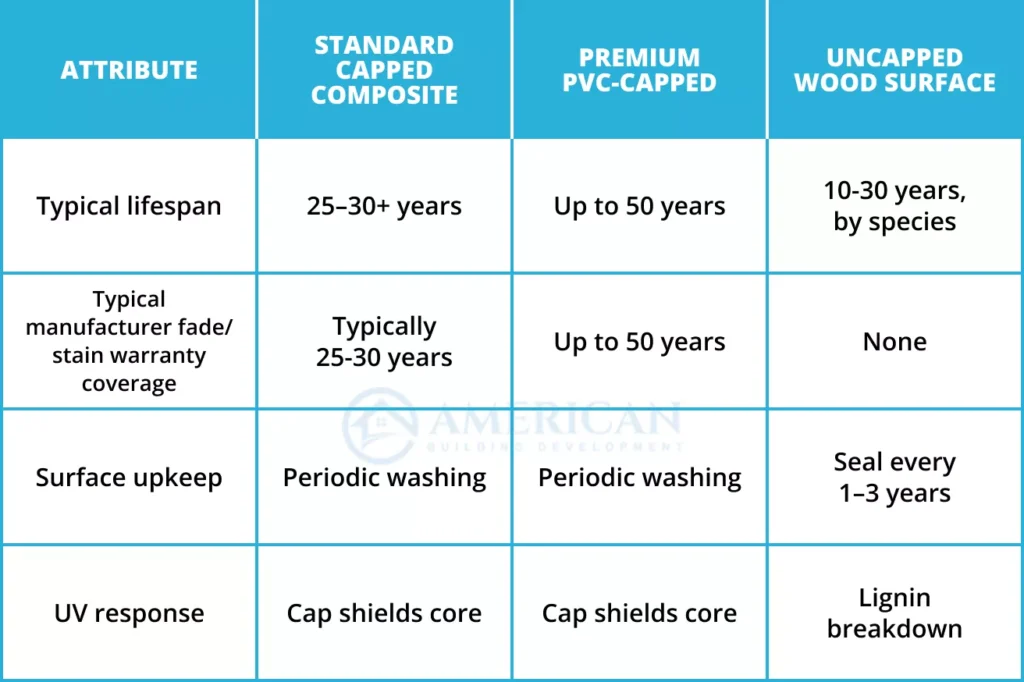
Why does the cap matter? UV degrades lignin, moisture invades fibers, and wet-dry cycles erode what’s left. A capped composite is designed to resist moisture and UV exposure better than untreated wood. However, prolonged exposure, heat, installation conditions, and trapped moisture around the underlying framing can still affect long-term performance.
Warranties skip framing, though. Boards can look new at year fifteen over spongy joists, so Trex composite deck installers treat joist tape and flashing as standard – vital on elevated decks.
Why Waterproofing Matters Most for Elevated Decks
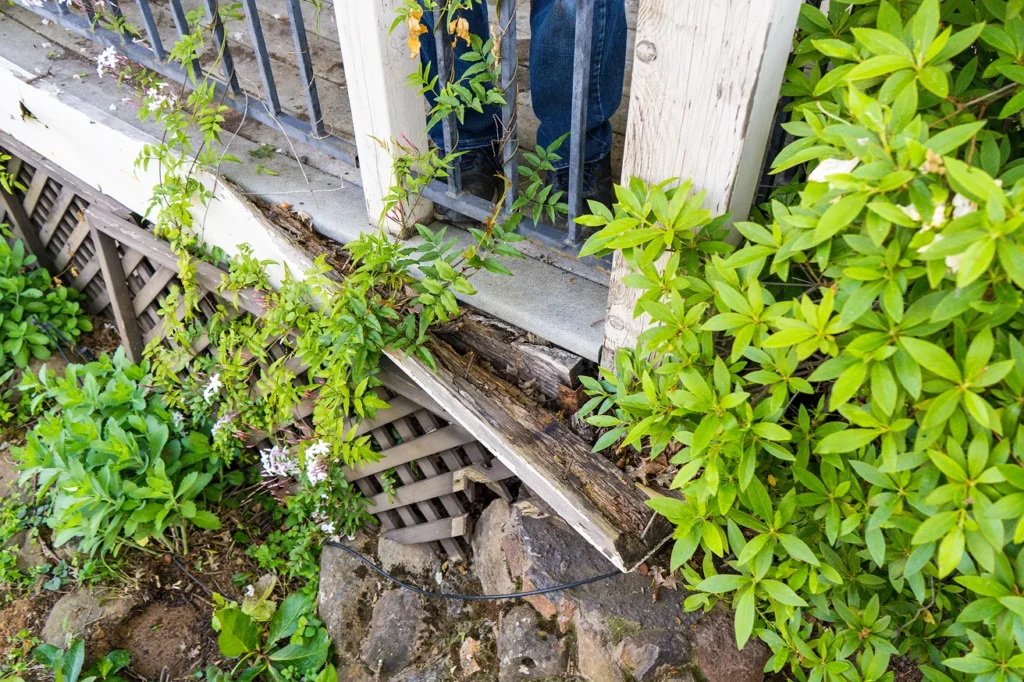
On a second-story deck or balcony, the ledger-to-house connection is one of the most important areas to inspect for moisture intrusion and structural deterioration. That joint – where the deck’s rim board bolts to your framing – is the most failure-prone spot in residential deck construction. Rain sheets down the siding, collects behind the ledger, and sits there. Over the years, it rots the rim joist and corrodes the very fasteners that hold the deck to the building.
What protects that joint? Ledger flashing manages water at the deck-building interface, while joist tape can help protect the tops of wood joists and beams from repeated wetting. On balconies and other assemblies designed as waterproof walking surfaces, a complete waterproofing system may also include a sloped substrate, membrane, sealed penetrations, perimeter flashing, and drainage details.
ABD’s field observations across Sacramento-area projects are consistent: connections fail years before the surface material does. We provide a 5-year workmanship warranty on all repair and remodeling work.
For waterproof balconies and elevated walking surfaces, the appropriate assembly depends on the structure and specified system. California requirements, such as SB 721 and SB 326, address inspection obligations for certain elevated exterior elements of multifamily buildings; they are separate from the waterproofing product or installation specification.
Knowing what to look for lets you catch this kind of hidden damage before it becomes a structural problem.
Signs Your Deck Is Wearing Out Early
Four symptoms tell you the structure is aging faster than the calendar says.
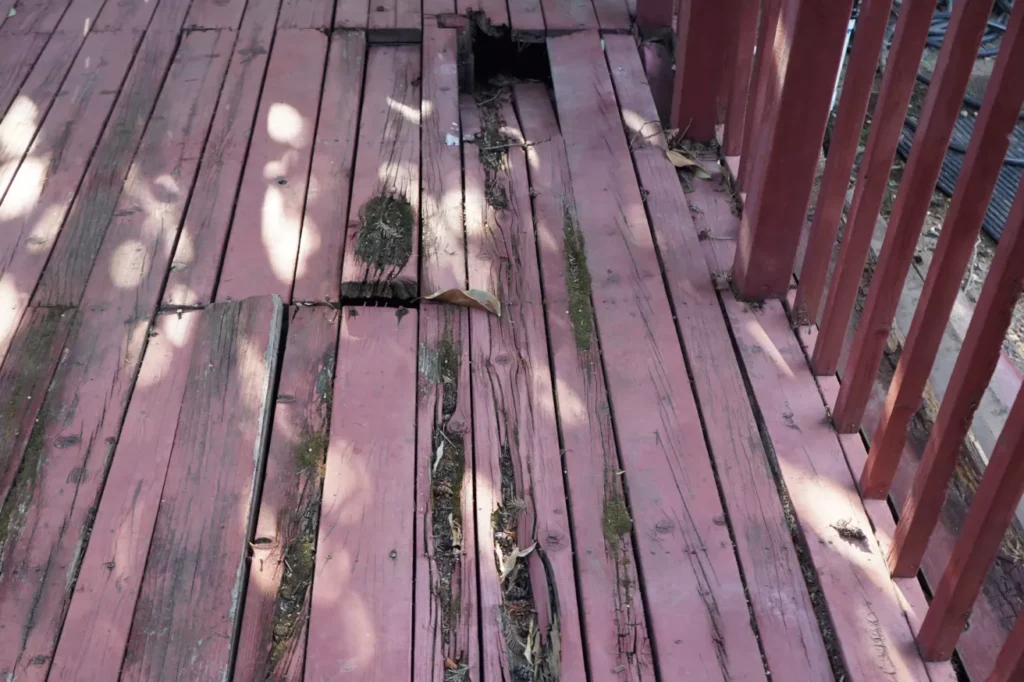
Soft or spongy boards come first. On exposed wood decking, press a flat-head screwdriver into a suspect board – if the tip sinks with light pressure, that’s rot, not surface wear. Do not use a screwdriver or other sharp tool on a balcony with a waterproof coating or membrane; check for unusual softness there by applying pressure with your hand or foot instead. If the boards feel springy underfoot even though they look sound, the joist hangers below may be corroded.
Rust streaks at fasteners are the next tell. Brown staining bleeding down from lag bolts or screws means water has been sitting in that connection long enough to eat away at the galvanizing. The fastener is losing capacity, while the surrounding wood looks fine.
Gaps at the ledger board are the one to take seriously. A visible separation between the ledger and your siding, or lag bolts backing out, means the connection holding your deck to the house is failing. Call deck repair specialists before anyone stands on it again.
Premature fading and splitting round out the list. Premature graying and checking early in a wood deck’s life mean sealing cycles were missed. On composite, heavy fading well inside the warranty window is worth documenting.
Catching these signs early is only half the equation – the other half is a maintenance routine that actually prevents them.
How to Extend Your Deck’s Lifespan
Seal or stain wood every one to three years. Clear finishes generally provide less protection from UV-driven graying, while many stains can last two to three years before recoating is needed. Water soaking in instead of beading can be a sign that the finish needs attention. Composite needs periodic cleaning, often once or twice a year depending on exposure and manufacturer recommendations.
Surface care matters, but deck lifespan also depends on flashing, drainage, framing, fasteners, and structural connections.
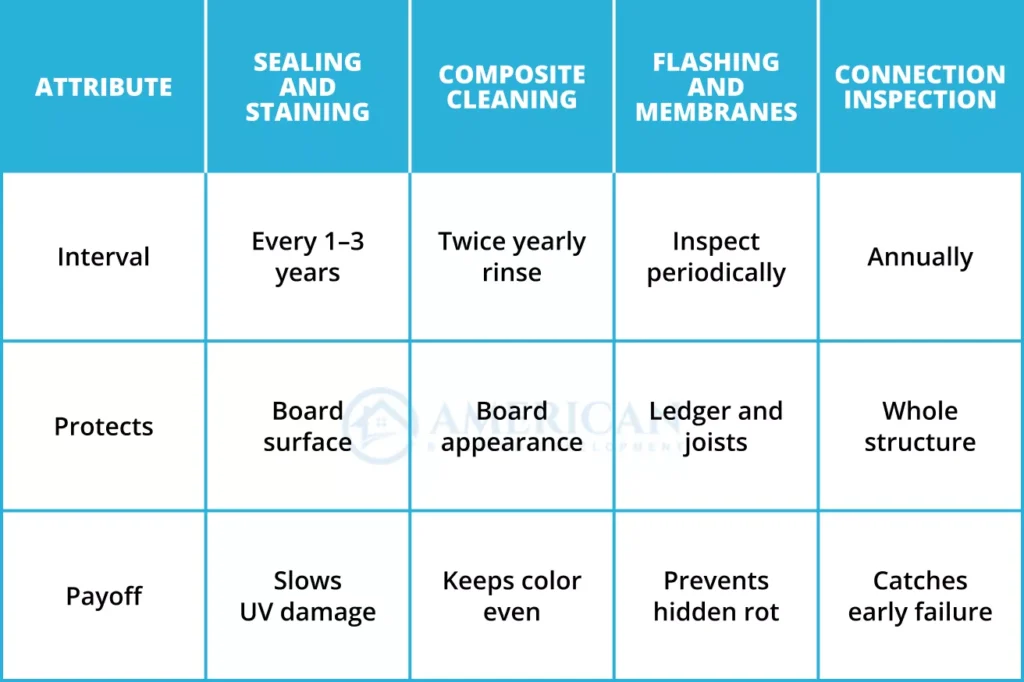
Install ledger flashing in one continuous strip with the overlaps arranged so water sheds away from the structure, and seal every opening made by fasteners. Wood rots when it can’t dry. Inspect connections annually: rim joist, lag bolts, siding staining.
Unsure about your framing? Get a Free Estimate.
What We’ve Seen Working Across Northern California
ABD crews have regularly found that ledger and joist connections give out years before the surface material shows its age.
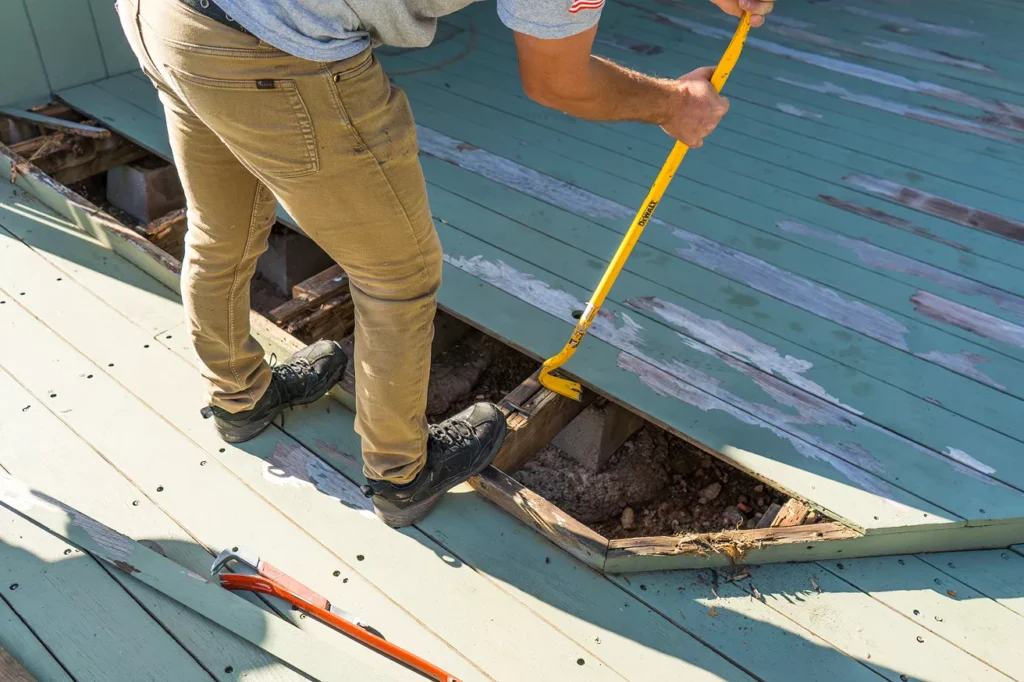
Picture a mature redwood deck in the region. The owner wants a refresh and thinks it’s a board swap. Pull two boards near the house and the rim joist crumbles because nothing ever flashed that joint. That’s not a surface problem, which is why ABD pairs dry rot repair in Auburn with a structural inspection rather than cosmetic patching.
So what does that field experience change about how a deck gets built? ABD provides a 5-year workmanship warranty on all repair and remodeling work. On deck installations, the connections are protected from day one with joist tape, correctly lapped flashing, and through-bolted ledgers. Trex Pro Gold certification covers the composite side; Westcoat waterproofing handles balconies and elevated framing where trapped water shortens deck lifespan fastest.
That hands-on pattern is exactly why waterproofing and connections are the real question of lifespan, not just the decking material.
Final Thoughts on Getting the Most Life from Your Deck
Plan on 10-30 years for wood, depending on species and care, and 25–50 years for composite – but only if the framing underneath is protected. Unflashed connections can significantly shorten either lifespan well below expectations, and decking warranties generally do not cover a rotted rim joist.
So where should your money go? Put it into the parts you’ll never see again after installation day: flashing at the ledger, tape across the joists, membrane under an elevated surface. Those details cost a fraction of the decking and decide whether you’re refinishing boards in year twelve or rebuilding structure.
A homeowner in Rocklin choosing between redwood and composite is choosing both the material’s lifespan and the maintenance schedule. But neither material performs well over compromised framing: installation quality, flashing, drainage, and ongoing maintenance all influence how long the finished deck remains serviceable.
If you’re weighing materials for a new build or trying to figure out why an existing deck is aging prematurely, our deck-building services start with an inspection of what’s happening beneath the surface. Get a Free Estimate, and you’ll know whether you’re looking at a resurface or a rebuild.
Moisture problems rarely stop at the deck – Auburn siding contractors see the same failures where decks meet walls.
FAQ
Typically 10–15 years, occasionally 20 with consistent sealing. Ground contact points and fastener connections drive the outcome. If you don’t reseal cut end grain, California’s wet winters after dry summers shorten that range fast.
Generally 15–30 years, thanks to cedar’s natural oils resisting decay. It still needs regular cleaning and sealing to hold off weathering and UV fading. Without a maintained finish, California sun grays and dries cedar noticeably faster.
On the surface, yes – composite often falls in the 25–50-year range, while wood varies more: about 10–15 years for pressure-treated decking and 15–30 years for cedar or redwood with consistent care. But composite boards can easily outlast unprotected framing below them. The comparison only holds if the underlying structure is waterproofed as well.
Yes. Sealing ledger connections and adding proper flashing addresses the top cause of early structural failure. Membranes under elevated decks keep water off framing and house sheathing – usually cheaper than replacing rotted framing later.
Widespread soft or spongy boards across multiple areas indicate replacement, not just one bad spot. So does structural rot at the ledger board or several corroded joist hangers. A qualified inspection determines whether repair or rebuild is needed.
Intense UV and dry heat, followed by wet winters, create more expansion-contraction stress than milder climates do. Summer cracks and gray, unsealed wood; winter rain drives moisture into those openings. Elevated decks wear fastest at unflashed connections.