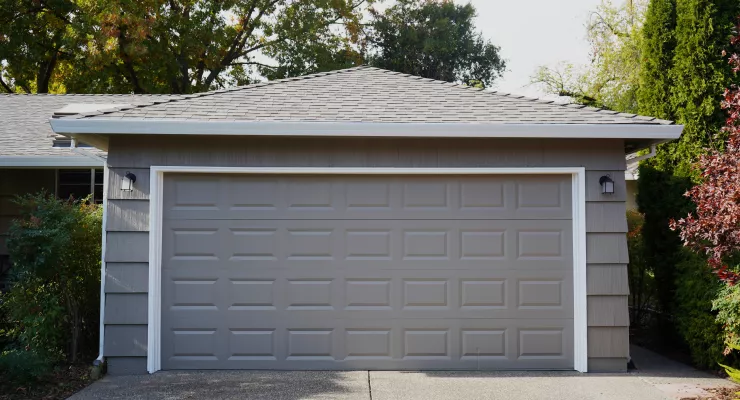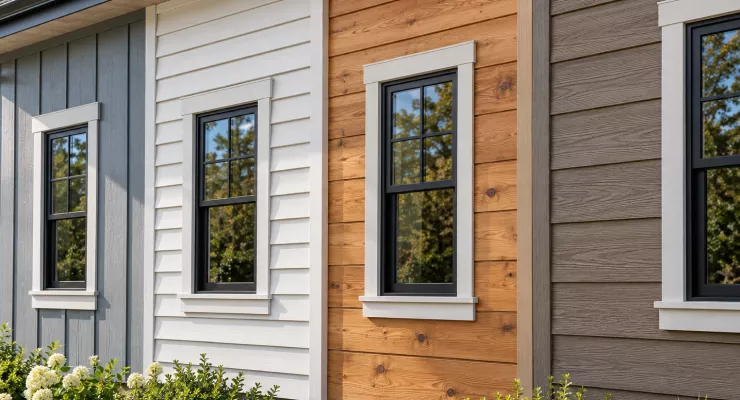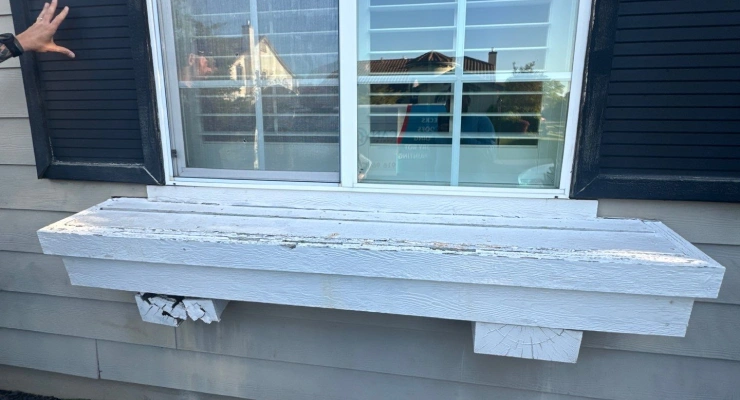
If your home has hardboard siding, older T1-11, or Masonite, you can often repair limited damage. But widespread swelling or soft spots usually mean it’s time to replace. Hardboard is made from compressed wood fibers bonded with resins and wax. Once water gets past the paint at the bottom edges or nail holes, the swelling rarely goes down again.
T1-11 refers to a grooved siding style, commonly made from plywood or OSB, while hardboard panels can have a similar appearance. This guide focuses on hardboard siding and its moisture-related problems. Hardboard is made from compressed wood fibers bonded with resins and wax. Once water gets past the paint at the bottom edges or nail holes, the swelling rarely goes down again.
Many Sacramento-area homes still have this type of siding, especially those built in the 1980s and 1990s. Years of sprinkler overspray, winter rain, and intense summer sun can wear down the protective finish, leaving the material vulnerable to moisture.
This guide explains how to identify your siding, spot signs of failure, and decide whether repair or replacement makes more sense. We’ll also compare three common replacement options: fiber cement, engineered wood, and vinyl.
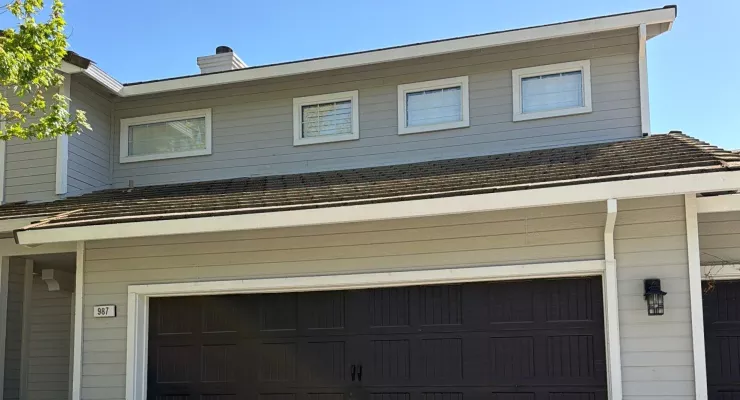
What Is Hardboard Siding?
If you’ve wondered, “What is hardboard siding?” the short answer is engineered wood. It’s a composite of wood fibers, resin, and wax. The fibers usually come from sawdust and chips, which are pressed under high pressure into dense boards. It was sold as lap boards, flat panels, and grooved sheets that mimic T1-11, and it shows up on many older California homes, particularly those built in the 1980s and 1990s.
You’ll often hear it called Masonite siding. Masonite became a well-known name for hardboard made using a wet process called the Mason Method. The name stuck so well that contractors now use “hardboard Masonite siding” as a catch-all label, and some homeowners simply say pressboard siding.
One mix-up is worth clearing up. Hardie board siding sounds similar, but it’s a James Hardie brand of fiber cement made from Portland cement, sand, and cellulose fiber, not compressed wood. That difference shapes how each material handles moisture, fire, and age.
Knowing the definition is one thing. Now let’s figure out what’s actually on your walls.
How to Identify Hardboard, Masonite, And T1-11
You don’t need special tools for this. A flashlight, a screwdriver, and about ten minutes will usually do it.
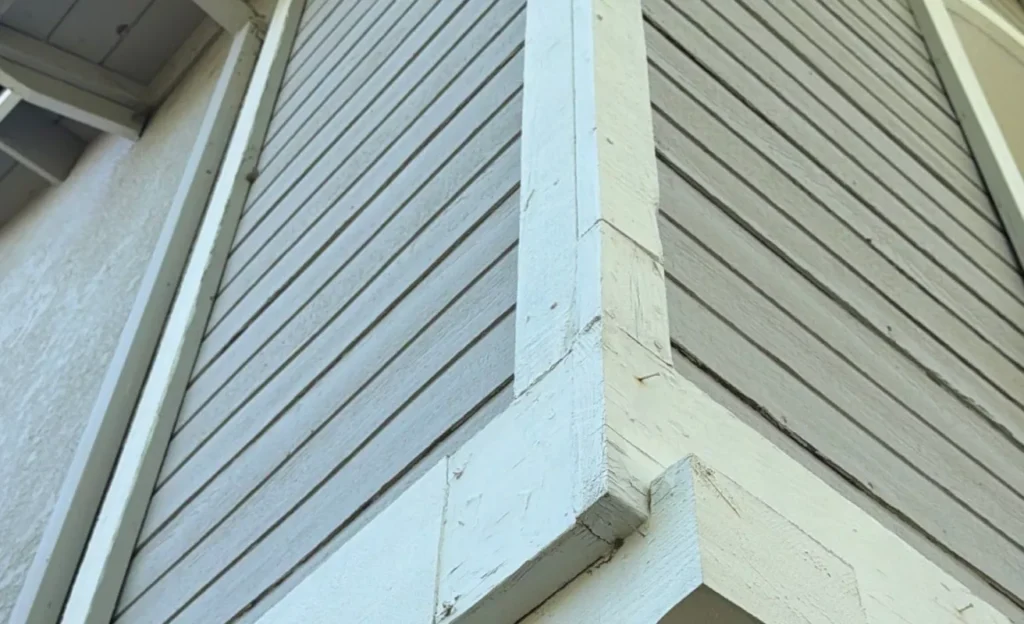
Start with a cut edge, such as the bottom of a board near a garage corner. Hardboard typically shows brown, compressed wood fibers. Fiber cement is generally gray and cement-like at a cut edge. That one check clears up most confusion.
Next, look at the format. Plywood or OSB T1-11 comes in 4×8 sheets with evenly spaced vertical grooves, and the back may show veneer layers or pressed strands. Hardboard lap siding runs horizontally, though hardboard siding panels can mimic those grooves, so the edge check still matters.
Markings can help too. James Hardie often imprints its name on the underside of planks near the nailing edge, and LP SmartSide knots may be stamped with L and P. Then check where trouble usually shows first: lower courses, north sides, and walls without overhang protection. Press lightly and note any spots that feel soft or mushy. An older home, especially one built in the 1980s or 1990s, also makes hardboard more likely.
Once you know it’s a hardboard, the natural question is why it so often breaks down.
Why Hardboard Siding Fails Over Time
Hardboard earned its place on so many homes for good reasons. It was affordable, and once painted it looked like real wood. Its weak point is the core of compressed wood fibers, which soaks up water wherever the factory seal breaks.
Most trouble starts at the lower drip edge, where water wicks up, and the paint is often thin or missing. Cut edges and holes from overdriven nails are the next easy entry points. Once moisture reaches the fibers, the board swells, and it often stays swollen after it dries. You’ll usually see swelling first, then buckling, then delamination with blistering or flaking, and peeling paint around edges and nail heads. Rot tends to follow at the bottom courses.
These problems were common enough that class-action settlements involving Masonite, ABTco, and LP followed. That history is a big reason Masonite siding still carries a shaky reputation.
California adds its own pressure. Sprinklers hitting walls, winter rain on exposed sides, and harsh summer sun all speed up wear on old hardboard.
If yours shows some of these signs, you may be wondering whether repair is still a reasonable option.
Can You Repair Old Hardboard Siding?
Yes, when the damage is limited. You can often patch, seal, and repaint a few swollen boards or small holes on one wall. Widespread swelling or soft spots are a different story.
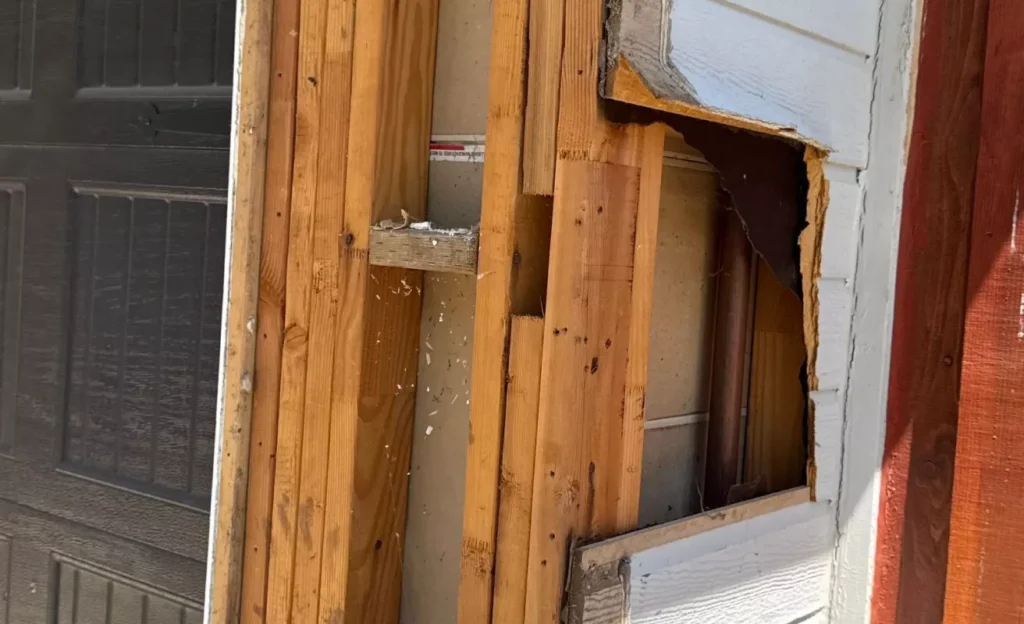
For a spot repair, scrape off loose paint and remove any soft fibers. Fill the area with an exterior two-part epoxy or elastomeric filler, sand it smooth, then prime before the topcoat.
Fix the water source first. If a sprinkler soaks the wall, a gutter overflows, or flashing is missing above a window, a new patch will just swell again.
Repair does have firm limits. Sealing and painting slow decay on hardboard, but they won’t reverse it. Once rot reaches the sheathing or framing, or damage spans several sides of the house, replacement is the realistic path. If you suspect hidden damage, have an inspector or dry rot removel specialist check it.
Twice a year, check for cracked paint, missing sealant, and popped nail heads, and fix them early. And if a replacement does come up, you’ll want to know whether you can even buy a hardboard again.
Is Hardboard Siding Still Available?
Mostly, no. Hardboard has been largely phased out of residential new construction, and the brand most homeowners recognize is gone.
Masonite announced plans to phase out its hardboard siding in 2001, after years of moisture complaints and legal claims. So the Masonite on your home is no longer manufactured, even though contractors still use the name as shorthand for any hardboard.
A few other makers still produce hardboard, but it’s mostly a special-order item at building supply outlets. That creates a real headache for repairs. Profiles, textures, and thicknesses have shifted over the decades, so a new board rarely lines up cleanly with an older wall. You could end up with a patch that still looks off after fresh paint.
The modern successor is engineered wood, and LP SmartSide is the best-known example. It’s sold as lap and panel siding, treated with LP’s SmartGuard process, and backed by a prorated limited warranty. Think of it as a newer take on wood-based siding rather than an exact match for what’s on your house now.
So what should go on your walls instead? Here are the main choices.
Hardboard Siding Replacement Options
Most replacement projects come down to three materials: fiber cement, engineered wood, and vinyl. Each suits a different budget and set of priorities.
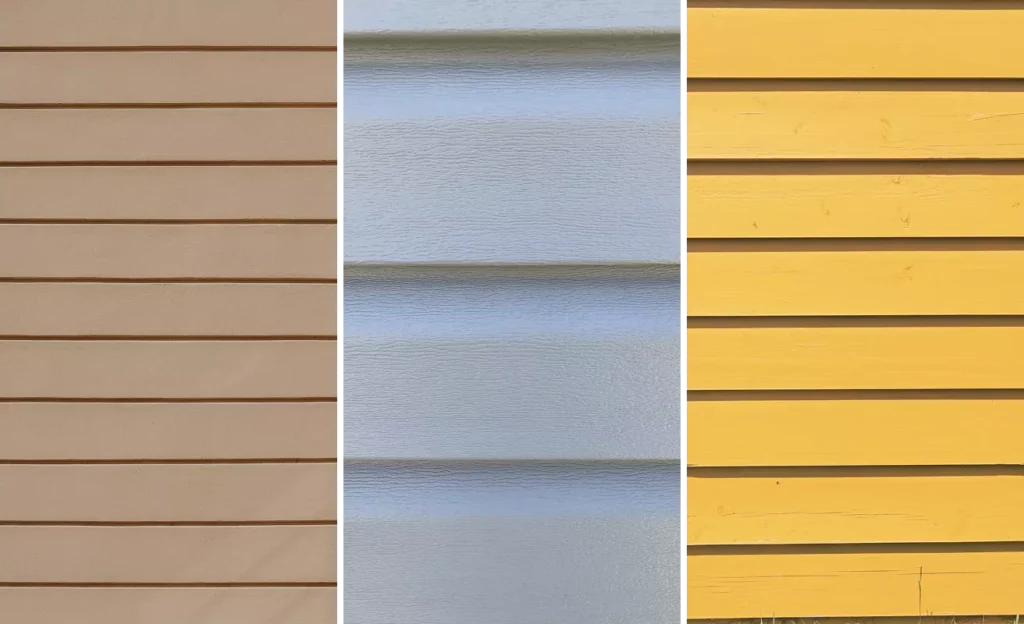
James Hardie fiber cement siding stands out for many Sacramento-area homes. Made from cement, sand, and cellulose fiber, it’s noncombustible and resists moisture, rot, and pests. That matters in wildfire-prone areas. The trade-offs are real, though: it’s heavy, and the factory finish eventually needs repainting.
Engineered wood, such as LP SmartSide, offers a wood look at a mid-range cost and handles impacts well. It’s still combustible, and poor installation can invite swelling. Vinyl keeps upkeep and budget low and never needs paint. It can soften or warp under intense heat, which is a real concern in hot inland summers.
When you weigh hardboard siding vs fiber cement, the core difference is water. Hardboard wicks moisture into its wood fibers, while fiber cement is built to resist it. Hardie board siding is fiber cement, not hardboard. If comfort is a goal, the siding and insulation guide covers energy upgrades you can make during a re-side.
Here’s a closer side-by-side look at how the three compare.
Fiber Cement vs. Vinyl vs. Engineered Wood
Each material wins on a different priority.
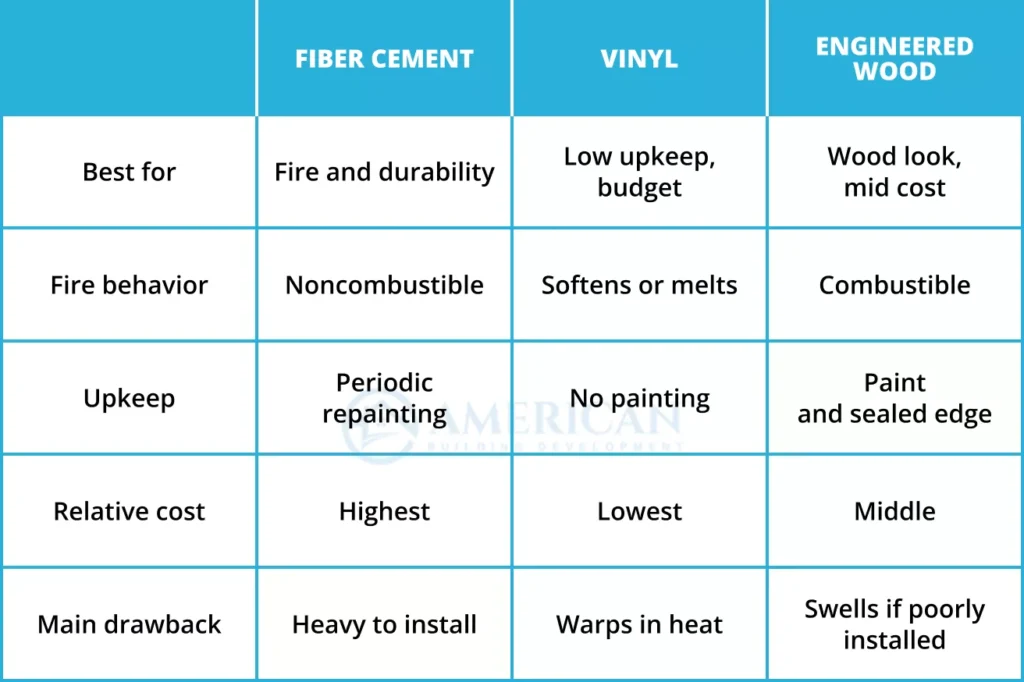
Vinyl is generally the least expensive option, engineered wood falls in the middle, and fiber cement is usually the most expensive, but actual costs depend on the material brand, installation complexity, and local rates.
Match the column to your top priority. With the options in mind, the next question is what the project will cost.
Hardboard Siding Replacement Cost Factors
There’s no single price for replacing hardboard siding, because every house brings its own mix of size, materials, and hidden conditions. Six factors drive most of the total:
- Home size and total wall area
- Siding material
- Tear-off and disposal of old boards
- Sheathing or water-barrier repair found after removal
- Trim around corners, windows, and fascia
- Labor rates and wall complexity
In simple terms:
installed cost = wall square footage × price per square foot + repairs + trim
Cost guides tend to agree on how the materials rank. Vinyl is usually the least expensive, engineered wood lands in the middle, and fiber cement costs the most. Hardie board siding cost reflects that premium tier.
Where you live matters too – Sacramento-area pricing tends to run higher than national averages because of full tear-off, trim work, and local labor rates. Any hardboard siding cost figure you find online is only a rough starting point.
A written estimate based on your actual walls is far more useful.
Should You Keep Or Replace Your Siding?
The answer usually depends on how far the damage has spread. A few tired boards call for a repair.
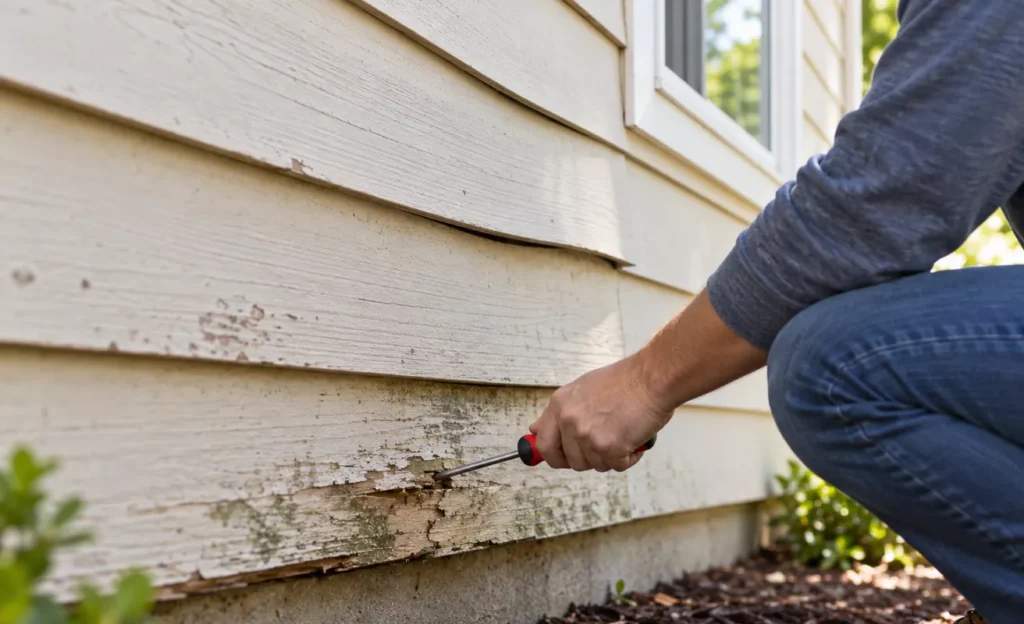
Lean toward replacement when you see widespread swelling, soft spots that give under a screwdriver, more frequent repainting, or damage on the lower courses. Swollen or bowing boards suggest water has been trapped in the wall, and that swelling won’t reverse. Patching spongy areas doesn’t fix what’s underneath.
Repair still makes sense when wear is isolated. If the damage is limited to a few boards, the rest feels solid, and the framing behind them is dry, spot repair and fresh paint can buy you years.
There’s one catch. Rot in the sheathing or framing often stays hidden until you remove the old boards, so leave some flexibility in your replacement budget.
Not sure where your home falls? A Sacramento exterior remodeling contractor can inspect your siding and provide a replacement quote. Foothill homeowners can call siding contractors in Auburn.
To ground this in real jobs, here’s what tear-offs of old hardboard siding tend to reveal.
What We See Behind Old Hardboard & T1-11 Siding on California Homes
Tear-offs on Sacramento-area homes tend to tell a familiar story. Damage on aging hardboard, Masonite, and T1-11 rarely starts in the middle of a wall.
It usually begins at the bottom courses, where sprinkler spray and splashback keep the lower edge damp. Nail holes come next, especially around overdriven fasteners that broke the paint film. Then come cut edges at corners, window trim, and butt joints, where the factory seal was never complete. On T1-11, the bottom edge of each 4×8 sheet and the grooves near grade often show swelling first.
Once the old siding comes off, the sheathing and framing behind it come into view. Sometimes a stained, soft-looking lower panel hides solid, dry wood behind it. Other times, a wall that looks fine shows dark, damp sheathing near the sill plate or under a window.
That’s why a siding assessment can only go so far before removal. If tear-off uncovers suspected moisture damage, a specialist should evaluate it, such as a team offering dry rot repair in Carmichael. Planning for that step keeps your estimate clearer.
Making the Right Call on Your Hardboard Siding
Identifying your old siding doesn’t have to be a mystery. Once you know whether your walls are hardboard, Masonite, or T1-11, the next steps get much clearer.
Start with the edges. Brown fibers point to hardboard, and swelling at the bottom courses, nail holes, and cut edges show you where moisture is getting in. Isolated damage can often be patched, sealed, and repainted. Widespread swelling, soft spots, or constant repainting usually mean replacement is the smarter long-term move.
If you replace, match the material to your priorities. Fiber cement suits homeowners who want fire resistance and durability. Engineered wood offers a wood look at a middle price, and vinyl keeps both budget and upkeep low.
For more planning help, the ABD siding blog covers materials, costs, and maintenance in plain language. Curious what a finished re-side looks like? Browse recent exterior projects from homes across the Sacramento region.
Ready for a clear price on your walls? Get a Free Estimate from American Building Development, with flexible financing available if you need it.
FAQ
Hardboard siding is engineered wood made from compressed wood fibers, resin, and wax. It was sold as lap boards, flat panels, and T1-11-style grooved sheets, and it was especially common on homes built in the 1980s and 1990s.
Mostly, no. Masonite stopped making its hardboard siding around 2001, and the few remaining products are usually special order. Engineered wood, such as LP SmartSide, is the common modern successor.
No. Hardboard is made from wood fibers, while Hardie board is James Hardie fiber cement. Fiber cement is noncombustible and handles moisture much better than hardboard.
It absorbs moisture at edges, nail holes, and bottom courses, which leads to swelling, buckling, and rot. It also needs regular painting and caulking, and matching repair boards can be hard to find.
It was affordable, looked like real wood once painted, and was easy to install. Builders used it widely in past decades, before its moisture problems became well known.