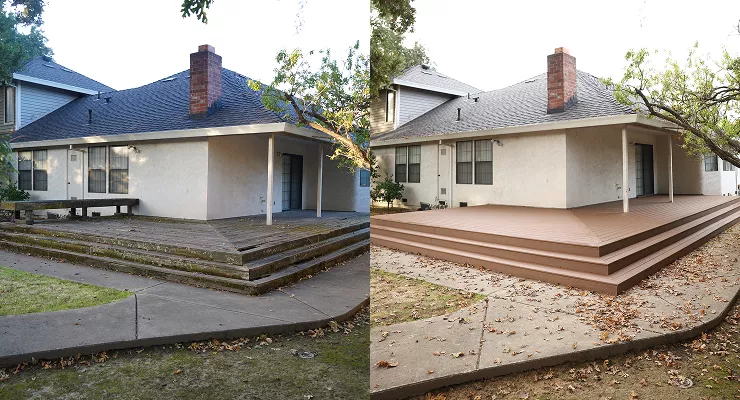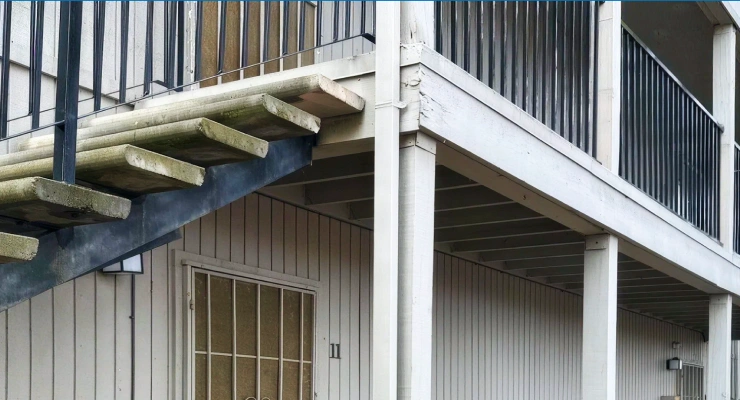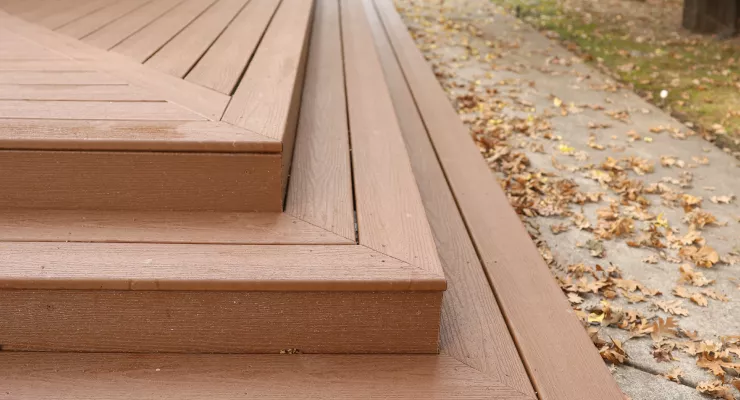
For most Sacramento County homes, capped composite and PVC boards are the best decking materials out there – they handle Valley heat, sun fade, and the wet winter, dry summer swing with almost no upkeep. Wood like redwood and pressure-treated lumber still earns a spot if you don’t mind sealing it, and it costs less up front.
This guide compares composite, PVC, redwood, and pressure-treated wood against the conditions that actually matter here: triple-digit afternoons, soggy January weeks, and foothill wildfire codes. You’ll get straight answers on cost, maintenance, heat underfoot, and fire ratings, including composite’s honest trade-offs, not just its wins. So which material fits your home, your budget, and how you live outside? Let’s start with the short answer.
Which Decking Material Is Best for Sacramento County?
For most homes here, capped composite or PVC decking (think Trex) tops the list. It shrugs off Valley heat, sun fade, and warping far better than wood, and asks almost nothing of you in return.
Sacramento summers run hot and dry, then winters turn wet. That swing is what cracks, splits, and fades untreated wood over time. Composite and PVC, on the other hand, handle the wet-dry cycle without much drama at all.
Is wood off the table? Not at all. Redwood stays a good budget pick if you don’t mind sealing every couple of years, and pressure-treated lumber costs even less up front. Composite’s honest trade-off: surface heat underfoot on triple-digit days and a higher price tag. Lighter colors help quite a bit.
| Attribute | Composite/PVC | Redwood | Pressure-treated |
|---|---|---|---|
| Upfront cost | Highest | Mid | Lowest |
| Maintenance | Very low | Regular sealing | Regular sealing |
| Heat/fade resistance | Best | Fair | Fair |
Not sure what fits? Trusted Sacramento deck contractors match materials to how you actually live outdoors, and get a Free Estimate first. But let’s start with composite.
Composite Decking: Trex and Other Top Brands
Composite decking has earned its reputation on Sacramento decks. It stands up to relentless summer sun and the wet-to-dry seasonal swing without the cracking and splintering that wood tends to suffer.
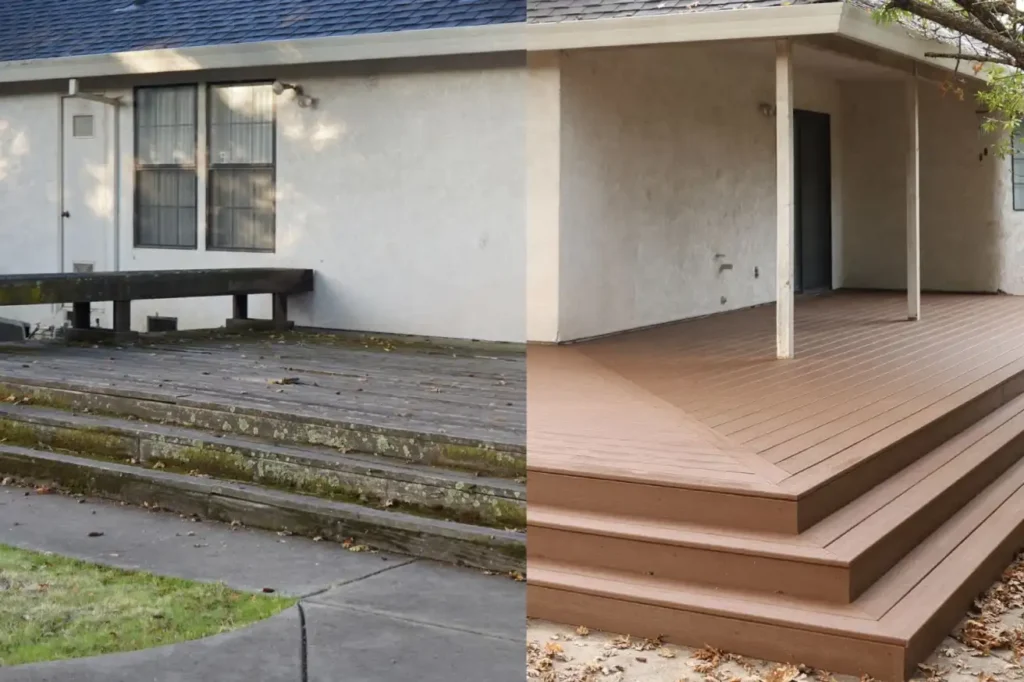
Trex leads the category, blending roughly 95% recycled content–reclaimed wood fiber and recycled plastic film pressed into weather-resistant deck boards. That plastic gives the composite deck boards the flexibility to resist warping. Warranties reveal how much confidence a maker has in its own product. Want a quick read on the big three?
| Feature | Trex | TimberTech | Fiberon |
|---|---|---|---|
| Fade/stain warranty | 25-50 yr | 25-lifetime | 25-50 yr |
| Cap coverage | Multi-sided | 4-sided polymer | Multi-sided |
| Recycled content | ~95% | High | High |
TimberTech’s PRO carries a 30-year fade-and-stain warranty. Fiberon’s Promenade backs its boards with lifetime structural coverage. Trex spans Enhance, Select, and Transcend tiers. The trade-offs? Composite runs hotter underfoot on 100-degree afternoons and costs more up front. In exchange, you’re buying decades of low upkeep.
If you’d rather skip the guesswork, Trex deck installation experts can walk your yard and match a cooler color. Composite isn’t the only capped option, though – PVC decking takes moisture resistance a step further.
PVC Decking vs. Composite Decking
Here’s the short answer: PVC wins on moisture. It contains no wood fiber in the cap or core, so it doesn’t absorb water at all.
That matters through Sacramento’s wet winters. Composite decking hides a wood-fiber core beneath its cap, and even capped boards can absorb moisture over time in damp, shaded corners. PVC, in most cases, stays essentially mold-proof. So why would you ever pick composite? Look, PVC still has its own trade-offs.
| Attribute | PVC | Composite |
|---|---|---|
| Moisture resistance | Best | Good |
| Wood-grain look | Fair | Best |
| Board weight | Lighter | Heavier |
| Material cost/sq ft | $8-$15 | $5-$10 |
Composite offers a more convincing wood-grain look and typically costs less. Materials run roughly $5 to $10 per square foot for composite and $8 to $15 per square foot for PVC, per contractor pricing data. PVC deck boards weigh less, which shaves labor time on install day. The flip side? Those lighter boards can feel a touch bouncier underfoot once fastened down.
Picture a shaded north-side patio that stays damp all winter – that’s where you’d lean PVC. A sunny, open deck where you want warm wood tones? Composite earns its keep there. Wood, meanwhile, still has a place in Sacramento backyards for homeowners chasing a classic look.
Redwood & Other Wood Decking Options
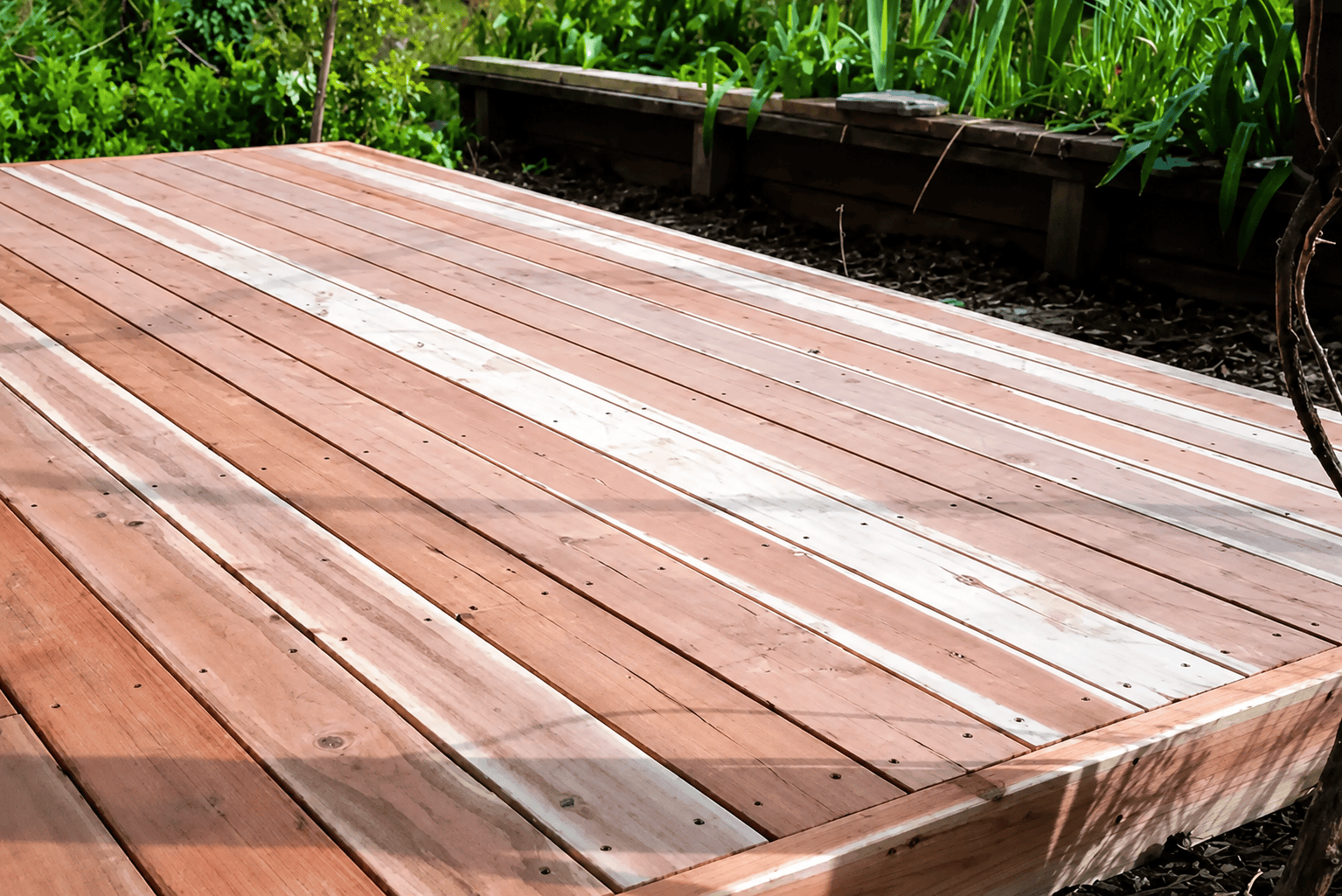
Wood still wins hearts. Redwood gives you that warm, natural grain composite only imitates, and it costs less up front than capped boards. The catch? It asks for real commitment. The best wood decking materials for Sacramento reward regular sealing and punish neglect pretty quickly.
Redwood earns its place as the classic choice. Heart-grade boards can last 40 years with care. Common-grade decking runs 25 to 30 years when maintained. Use a penetrating sealer with UV inhibitor, never paint.
Pressure-treated wood is the budget runner-up. It costs the least of any option here, though it fades and warps faster under Valley sun. Both need attention. In drier stretches, power-wash every third year; sealing and staining runs roughly $2 to $5 per square foot, per deck maintenance cost data.
| Attribute | Redwood | Pressure-treated |
|---|---|---|
| Upfront cost | Mid | Lowest |
| Lifespan | 25-40 yr | Shorter |
| Sealing needed | Every 1-3 yr | Every 1-3 yr |
Skip the upkeep, and you invite dry rot–the number-one reason wood decks fail early. Catch soft spots fast with deck repair services, or address advanced dry rot repair for wood decks before it spreads to joists. For homeowners weighing heat and drought above all else, here’s how each material actually performs.
Best Decking Materials for Heat, Sun, and Drought
In sustained Valley heat, the best decking materials for hot, dry climates are capped composite and PVC boards with UV-stable, reflective color technology. Their cap layer blocks the sun from fading the boards and holds thermal expansion in check, so you won’t see the warping and cracking that uncapped wood suffers.
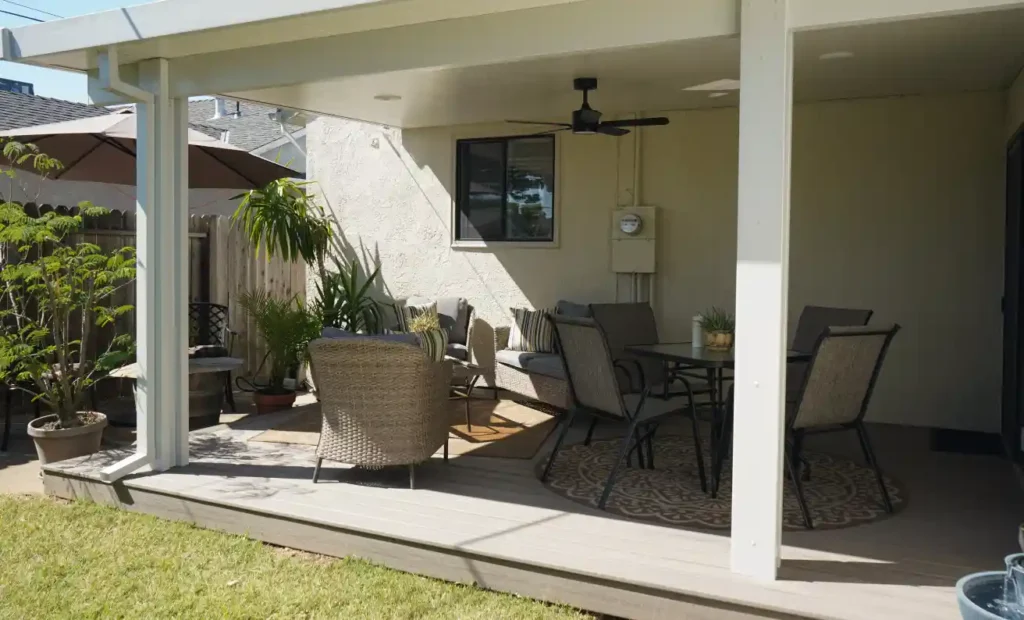
Color is your biggest lever here. In one real-world test at 86°F, composite surface temperatures ranged from 135°F for light shades up to 148°F for dark brown–a swing you feel through bare feet. So which stays coolest? PVC boards typically run cooler than composite boards, and both do best with lighter palettes.
| Attribute | Capped composite | Capped PVC |
|---|---|---|
| Fade resistance | Excellent | Excellent |
| Surface heat | Higher | Lower |
| Cools after sundown | Slower | Faster |
For any deck that receives full afternoon sun, choose a light, reflective color for the line. It’s the simplest fix for a hot surface. Among the best decking materials for the West, capped boards outlast wood in fade tests by decades. Ready to compare cooler color options? Trex installers near you can pull samples for your yard.
Heat is only half the equation in Sacramento County’s foothill communities – wildfire risk changes the material conversation too.
Fire-Resistant Decking for Wildfire-Prone Areas
If your home sits in Sacramento County’s foothills or a wildland-urban-interface zone, fire rating outranks looks. The best decking materials for wildfire-prone areas carry a Class A Flame Spread Rating – the top score, 0 to 25 – so they resist ignition and slow the spread of flames.
California Building Code Chapter 7A requires exterior construction in WUI fire areas to be fire-resistive, and decking must pass state-mandated fire tests before use. Boards within 10 feet of the house must be noncombustible, fire-retardant-treated, or an approved ignition-resistant alternative.
So which products qualify? The best fire-resistant outdoor decking materials include Class A-rated composite and PVC lines.
| Attribute | Trex Refuge | TimberTech Advanced PVC | Ipe hardwood |
|---|---|---|---|
| Material | Composite | PVC | Dense wood |
| Fire rating | Class A | Class A | Class A |
| Upkeep | Very low | Very low | Regular sealing |
Trex Refuge meets the toughest WUI codes. TimberTech’s Vintage and Landmark PVC collections carry the same designation. Prefer real wood? Dense Ipe naturally holds a Class A rating but requires regular maintenance. Always confirm current requirements with your local building department.
How to Choose the Right Deck Material for Your Home
The best decking materials for the West come down to three questions, really: your budget, how much upkeep you’ll tolerate, and how you plan to use the space.
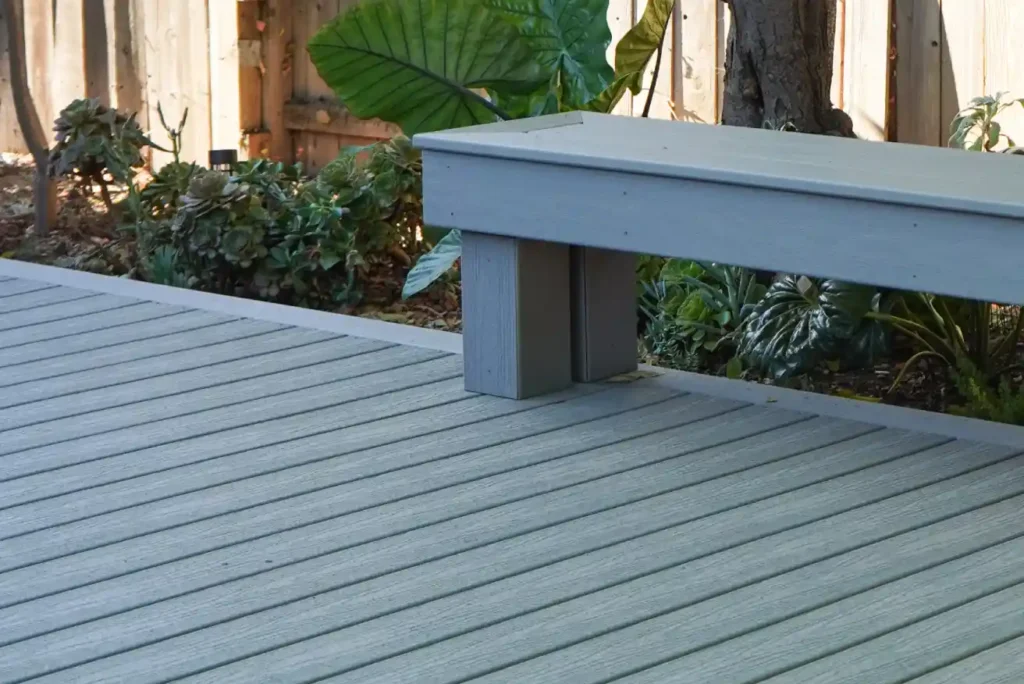
Entertain often and hate maintenance? Lean composite or PVC. Want lower upfront cost and don’t mind sealing? Wood fits.
| Priority | Composite deck boards | PVC | Wood |
|---|---|---|---|
| Upfront cost | Higher | Highest | Lowest |
| Upkeep | Very low | Very low | Regular |
| Lifespan | 25-50 yr | 25-50 yr | 15-40 yr |
Know composite’s trade-offs too. Documented complaints include uneven fading in sun, scratching from dragged furniture, and boards warping or cupping after install–so buy quality lines and follow spacing guidance closely.
Match the material to the spot. A shaded, damp corner favors moisture-proof PVC. A sunny gathering deck rewards a light-colored composite line that stays cooler. Still torn? A walkthrough tends to clear it up. Explore custom deck design and build services to see samples in your yard. Get a Free Estimate to compare real numbers.
Next, what has been observed to hold up (and fail) on Sacramento County decks.
What We’ve Seen Work on Sacramento County Decks
Real backyards tell a consistent story. Industry observers and contractors have documented that capped composite and PVC boards tend to maintain their appearance long after wood has started to struggle with Sacramento County’s climate swings.
The pattern is clear: composite and PVC decks typically weather the wet winter, hot summer cycle with little more than an occasional wash. They don’t cup, splinter, or gray out the way exposed wood does.
Wood tells a different story. A well-sealed redwood deck can serve beautifully for decades–but skip the maintenance, and dry rot moves in fast. Soft, deteriorating boards and crumbling joists beneath them are commonly attributed to moisture infiltration and insufficient sealing. Those decks often fail years before their rated lifespan, usually because sealing gets postponed one season too many. Consider a shaded backyard deck that never got resealed – water pooled, rot spread to the framing, and what could’ve been a stain job became a partial rebuild.
The lesson here is simple. Low-maintenance boards protect you from your own busy calendar. With real-world performance in mind, here’s a quick recap to help you decide.
The Final Words On Choosing Your Deck
Here’s what it comes down to for Sacramento County. Capped composite and PVC stand up to the hot-summer, wet-winter swing with almost no upkeep, while wood rewards a warm look with regular sealing. Match the material to your spot, your budget, and how much maintenance you’ll actually keep up with.
Live in a foothill fire zone? Class A-rated boards move from nice-to-have to non-negotiable. And on any deck that bakes in full sun, a lighter color is the simplest fix for hot feet.
Still weighing options? Browsing project write-ups on our blog can help you picture how each material ages in real backyards. You can also see finished decks by climate and style in our portfolio, which makes the trade-offs a lot easier to judge before you commit.
The best decking materials are the ones that fit your life, not just the spec sheet. Get a Free Estimate, and we’ll pull samples in your yard so you can compare real numbers.
FAQ
Trex composite gives you a warmer, wood-like look at a lower material cost. PVC resists moisture, mold, and mildew more effectively because it contains no wood fiber. For shaded, damp yards, lean PVC; for most sunny lots, Trex works well.
PVC requires the least upkeep because it contains no organic material that can rot or absorb moisture. High-quality capped composite comes close, needing only occasional washing. Wood, including redwood, always requires periodic sealing or staining.
Higher upfront cost than pressure-treated wood. Dark boards can get hot underfoot during peak Sacramento summer sun. Some scratching is possible, though capped boards resist it better than older composites.
PVC and dense hardwoods like ipe can last 25-50 years or longer with minimal upkeep. Quality composite typically lasts 25-50 years. Pressure-treated wood often lasts just 10-15 years, especially without regular sealing.
Yes. Composite resists the warping and cracking wood suffers during the dry-summer, wet-winter swing. UV-stable capstock helps it hold color under long valley sun. The higher upfront cost is offset by decades of low maintenance.